
Why Are Attic Rodent Problems Worse In Fall?
Rodent Risks As Autumn Temperatures Turn ‘Brrr’-isk!
The plummeting fall temperatures in New Jersey, Delaware, and Pennsylvania lead those smart rodents to instinctively seek warmth in a cozy winter nest away from predators and near a food source. That cozy, safe shelter is often a homeowner's attic!
Why Does The Attic Become An Attractive Fall Shelter?
When enjoying the warmth of home on cooler autumn days, be aware that those creatures of nature may also be drawn to the warmth rising from your home living space into the attic. Some of the reasons rodents are attracted to a home attic include:
Easy Rodent Access Points: ‘Hark, what light from yonder upper attic window,’ as the metabolic rate of mice, or 'uggh' rats, begins to increase in these warm-blooded creatures feeling the brrr-isk temperature change of autumn and their normal source of food, as insects, seed from bird feeders, varied nuts and fruits growing from trees or bushes, or vegetation from homeowner gardens, dries up. Common rodents seeking warm shelter in the attic include mice, rats, and squirrels. These creatures of the wild, seeing 'the light' of attic windows and feeling the warmth radiating from attics, gain access through gaps as small as a ¼ inch in the home foundation; mice and squirrels can crawl up brick chimneys and gain access via damaged roof vents and soffits, torn window screens, as well as gaps around pipes and chimneys. Overhanging tree branches are an excellent access point to the roof for squirrels and roof rats, and if there isn't a hole to enter, these rodents can gnaw a hole in fascia boards or roof shingles.
Built-in Nesting Material: Once the rodents find the way into the warm attic space, the softness of fiberglass insulation or blown-in cellulose insulation that is easy to burrow in makes such rodents decide to stay.
Food And Water Source Found: An attic with poor attic ventilation can cause the warm air that rises from the home living space into the cooler attic to bring attic condensation, and enough moisture to drip from the rafters for a source of water for the rodents taking up residence in the attic. As for a full Fall food smorgasbord, mice and rats are more than willing to travel through walls, utility lines, and plumbing gaps to the kitchen where they smell the crumbs left on the counter, in the kitchen trash containers, in pet bowls, or can chew through food boxes in the kitchen cabinets and pantry. They will also leave the attic to bring in food from the outside trash receptacles or bags of bird or grass seed stored in the garage!
Easy access to warm shelter, safety from predators, built-in nesting material for breeding, and abundant food and water sources - make for a Fall and Winter heavenly haven to shivering warm-blooded mice, squirrels, and rats!
Signs Rodents Have Made Attic Their Fall Home
As you, the weary homeowner, settle in for a restful sleep after a hard workday, mice or roof rats get active and start foraging for food. Squirrels, on the other hand, are diurnal and most likely will be heard scampering about during the day.
The signs that mice, rats, or squirrels have made a home in the attic include:
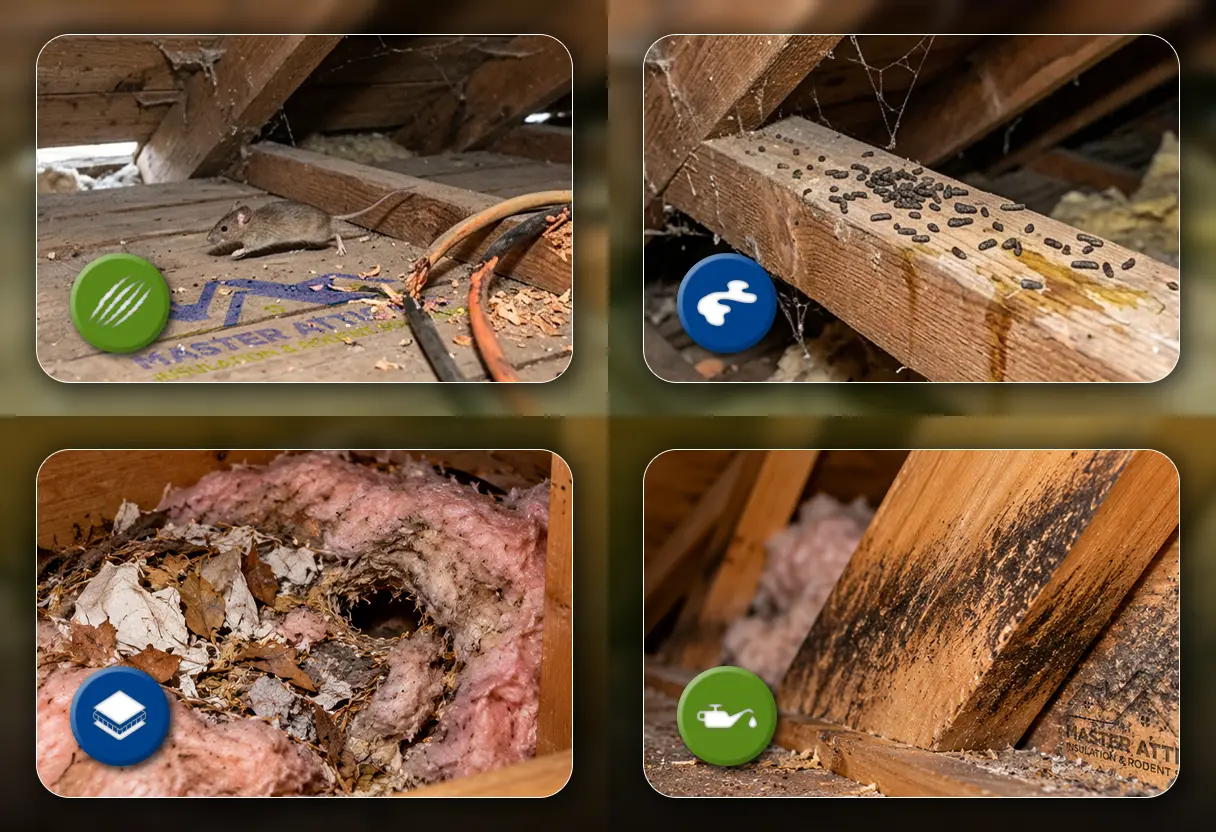
Attic Scratching, Scurrying Gnawing, Squeaking, Rolling: The first sign of a mouse or roof rat in the house (attic) is the light but rapid scurrying of their tiny feet across the attic floorboards. Added to the scurrying are high-pitched squeaks when searching for food, and faster squeaks when mating. Regarding the latter, there is the matter of the mouse or rat litter. Mice and rats breed rapidly and can give birth to 5 to 12 'pups,' while rats have 8 to 18 'pups.' Mice, Rats, and Squirrels instinctively gnaw to keep their incisor teeth from growing too long, so you may hear wood being gnawed, plastic attic storage containers being chewed, or, more dangerous to the homeowner's safety, insulation around electrical wiring being chewed! A professional attic inspection for rodent infestation will find small, parallel gnaw marks on attic beams, rafters, or stored wood furniture; chewed electrical wires that stripped the plastic insulation; and live wires left exposed! A squirrel scurry is heard during the day, and there might be a rolling sound of the acorns and nuts they have hoarded within the attic from outside burial spots. A rolling sound, as if something is being dropped, may mean a rat is dropping debris, such as treasures stored in attic bags and boxes.
Strong Urine Scent And ‘Rodent Droppings’: As we mentioned, rodent ‘droppings’ are quite ‘diSTINKtive’, and the size, shape, and pattern of the 'droppings' can determine who is living a 'happily ever after,' warm Fall and Winter heavenly haven, in the attic rafters! The scent of rodent urine is an ammonia-like odor that can drift to the home space via attic ducts.
Compressed Attic Insulation or Other Nesting Material: Attic nests of rodents are found in secluded corners, behind stored boxes, or within voids in walls. A mouse will build attic nests from shredded paper, fabric, leaves, and twigs it carries into the attic, or tear up the attic fiberglass insulation. Sometimes mice or rats will tunnel underneath the blown-in cellulose insulation. If rodent is nesting within attic insulation, their rodent urine can compress an damage the normally 'fluffed' insulation material.
Grease Marks Along Walls and Rafters: To determine that mice or rats made your attic their happy home, the
professional attic contractor needs only ‘follow the grease marks.’ Rats and mice carry oils and dirt within their fur,
and as they habitually travel same pathways, close to the attic walls, beams, and baseboards, the professional attic contractors of Master Attic will find the visible evidence of dark, grease smudges.
Rodents In The Home Crawlspace Too?
It’s a no-brainer to nature’s creatures of the wild - when the autumn trees start to blow, and temperatures drop low, it is instinctive for rodents to find warm shelter, with access to food and water, and safety from harsh winds, heavy rains, as well as predators such as owls, hawks, and the stalking stealth of the fox! A source of food and water must also be a necessary part of the shelter space for rodents in autumn, and why the mouse, rat, or squirrel can be easily attracted to ‘the great indoors’ of either a homeowners attic - or the crawlspace!
A shivering mouse or squirrel can be as happy under, as above, the home living space! All that is needed is easy access points such as small foundation gaps or cracks, damaged crawlspace vents, utility penetrations or gaps around pipes, or an open or damaged crawlspace door! While roof rats usually seek higher elevations in the attic, Norway rats, or brown rats known as sewer rats, prefer the warmth of the crawlspace. A crawl space is especially enticing when homeowners store dry goods like bird seed, grass seed, or grains grown in a home garden. This is known as a cereal space, and it's an open invitation to rodents looking for a food source. If the crawl space is not encapsulated with a vapor barrier to seal the floor and walls, and it's just a dirt floor, rodents will find the damp soil an ideal water source and feed on insects within it. From taking shelter under the house, the active mouse or rat can 'sniff out' the food source in the kitchen or attic space!
What Homeowners Can Do To Rodent-Proof Home In Fall Season
As homeowner, when feeling the first ‘brrr’isk’ temperatures of the Fall season, you can follow some simple preventative maintenance to rodent-proof the home space by eliminating rodent hiding spots:
Rake and Bag The Autumn Leaves.
Move Wood Piles Away From The Home.
Have Tree Branches Trimmed Back From Roof.
Ensure There Are No Plumbing Leaks In Attic or Crawlspace.
Make Sure Outdoor Trash Receptacles Have Tight Lids.
Always Wipe Kitchen Counter Clean, Keep Sink And Counter Dry, and Ensure Food Containers In Cabinet or Pantry Are Closed Tightly.
Professional Rodent Removal And Rodent Proofing
The above preventative maintenance helps homeowners discourage hungry rodents looking for warm shelter; however, calling a professional contractor experienced in attic services is best option for homeowners in New Jersey, Pennsylvania, and Delaware as cooler weather arrives, and before the cold winter!
Master Attic contractors follow a methodical process for rodent removal and rodent proofing. Call it the professional ‘EEE Process’:
Examination of home foundation, roof edge, soffits, fascia, and gable vents for the tiniest gap that allows rodents to enter.
Elimination of rodents in the attic or crawl space begins with an attic inspection. While wearing protective
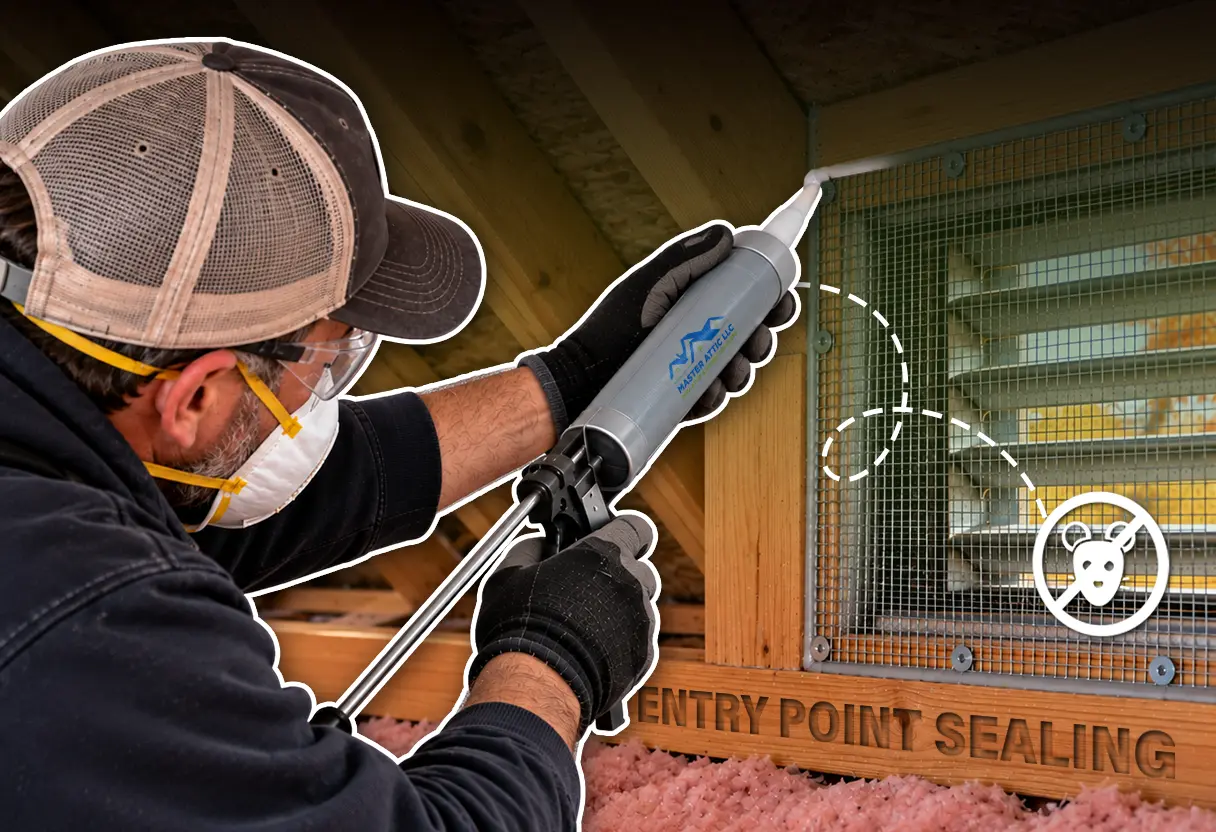
clothing, the professional attic inspection begins with a search for signs of rodent habitation by examining grease marks on walls and beams and gnaw marks on rafters. Trained Master Attic pros examine attic insulation for signs of tunneling or compaction that indicate a rodent nest. Master Attic technicians are trained and experienced in identifying rodent droppings, usually along the rodent's habitual travel route along walls, beams, and baseboards; searching for rodent nesting material hidden in attic corners and behind objects; and looking for chewed electrical wiring. Rodent removal begins after the entry points are sealed to prevent other rodents from entering. Removal involves strategically 'outsmarting' the smart instincts of mice, rats, or squirrels with appropriate trapping. After removing any nesting rodents from the attic or crawlspace, the job is finalized with attic cleaning and sanitizing.Exclusion: Sealing all attic entry points with ‘chew-proof’ material such as galvanized or stainless-steel mesh and filling gaps around chimneys, pipes, and electrical wiring with a heavy-duty sealant or fill fabric material.
Contact
Master Attic technicians are the pros to call for every attic or crawlspace difficulty! Trained in giving the eviction notice to raccoons, squirrels, rats, mice, and bats, who like taking up residence in attics in New Jersey, Delaware, and Pennsylvania homes. In addition to rodent removal, Master Attic technicians remove contaminated insulation caused by animals living in your attic and replace it with new attic insulation. Master Attic also understands the importance of rodent-proofing the attic by identifying and sealing off entry points.
Don’t wait - contact Master Attic via our website form or EEEE-mail us at info@masterattic.com.