
Why Are Attics Damp In The Fall?
Why Do Attic Moisture Problems Increase In Fall?
The increase in attic moisture as temperatures drop in autumn can be explained with three words: trapped indoor humidity. Humidity results from warm air mixing with cooler air. Humidity is the amount of unseen water vapor in the air, called absolute humidity. Relative humidity refers to the amount of moisture relative to the air temperature. The warmer the air temperature, the higher the relative humidity. It’s a slight misconception that the cooler outdoor temperatures of autumn bring less humidity. While cooler outdoor temperatures do mean drier, crisper air outside, that cooler outdoor temperature brings the roof deck to get cold, and when the warm air in the living space is rising and escaping into the attic via air gaps around plumbing pipes, light fixtures, and attic hatches, the warm inside air comes into contact with the cold roof deck - forming relative humidity in the attic space, which then forms attic condensation.
New Jersey and Pennsylvania Autumn Colors and Cooler Temperatures
The ‘mystery’ of the autumn colors of New Jersey and Pennsylvania, painting a palette of awe-inspiring colors primarily from the maple trees with their fiery red, orange, yellow leaves, standing amidst the oak trees of a yellow-brown bronze color, and deep burgundy red leaves, gives reason for the sightings of ‘leaf-peepers’ in New Jersey and Pennsylvania, with cameras, and artists with paint - all with firm resolve to capture such colors to film or canvas! The autumn ‘ahhh’s’ also bring about the change of temperature, producing the ‘br-rrrr’s’ in New Jersey and Pennsylvania - the cooler temperatures one answer to the mystery of the autumn colors in New Jersey and Pennsylvania! In this article, we explain how cooler autumn temperatures are also why New Jersey and Pennsylvania attics are damp in the fall!
What Are The Different Types Of Attic Moisture Problems?
Trapped Summer Moisture: When poor attic ventilation caused by a lack of balanced intake soffit vents and exhaust ridge vents allows outdoor hot, humid summer air to enter and stay trapped, it can lead to moisture buildup. Ensuring proper ventilation helps homeowners feel in control of attic health.
The Stack Effect: When there is a difference between air temperature and air pressure inside and outside the home, this is known as the stack effect. Warm air rises and escapes through the ridge vents at the top of the house, while cooler outside air is drawn in through the lower soffit vents to replace the escaping warm air. This vertical airflow is similar to how a chimney works. The greater the temperature difference between the inside and outside of the attic, the stronger the stack effect. When home activities like cooking and showering add warm air to the house, invisible water vapor also enters the cooler attic space, and the water vapor turns to liquid known as attic condensation.
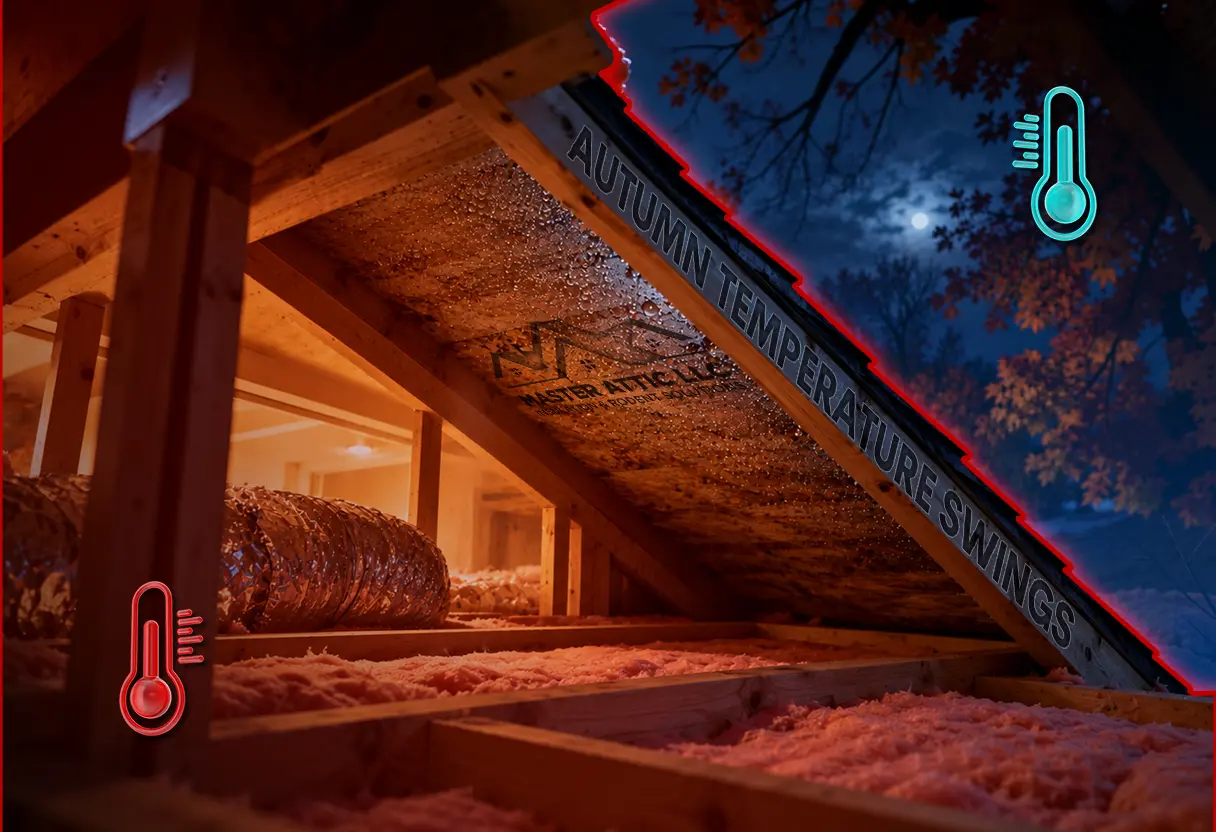
Temperature Swings: The fall season, known for its awesome colors, has the lower temperatures to thank for those awesome colors! However, fall is also known for big temperature swings: warmer afternoons, perfect for the 'leaf peepers,' with nighttime temperatures dropping by as much as 20 or 40 degrees. Homeowners may not always run the heating system consistently in autumn, creating temperature gaps between warmer indoor air and cooler home surfaces. Warm air naturally carries water vapor, and when warmer, moisture-laden air meets the cold external roof deck at night or cooler attic walls, it forms moisture droplets known as attic condensation; poor attic ventilation increases the risk of attic condensation.
Blocked Attic Ventilation: When the cooler temperatures of the fall season cannot enter the home attic space due to soffit vents and exhaust vents blocked by autumn leaves stuck within the eaves, there comes an attic airflow problem, which increases the warm, moisture-laden air from the home living space or leaky HVAC ducts into the attic - resulting in higher attic humidity and the formation of attic condensation.
What Are Signs Of Too Much Attic Moisture In Fall Season?
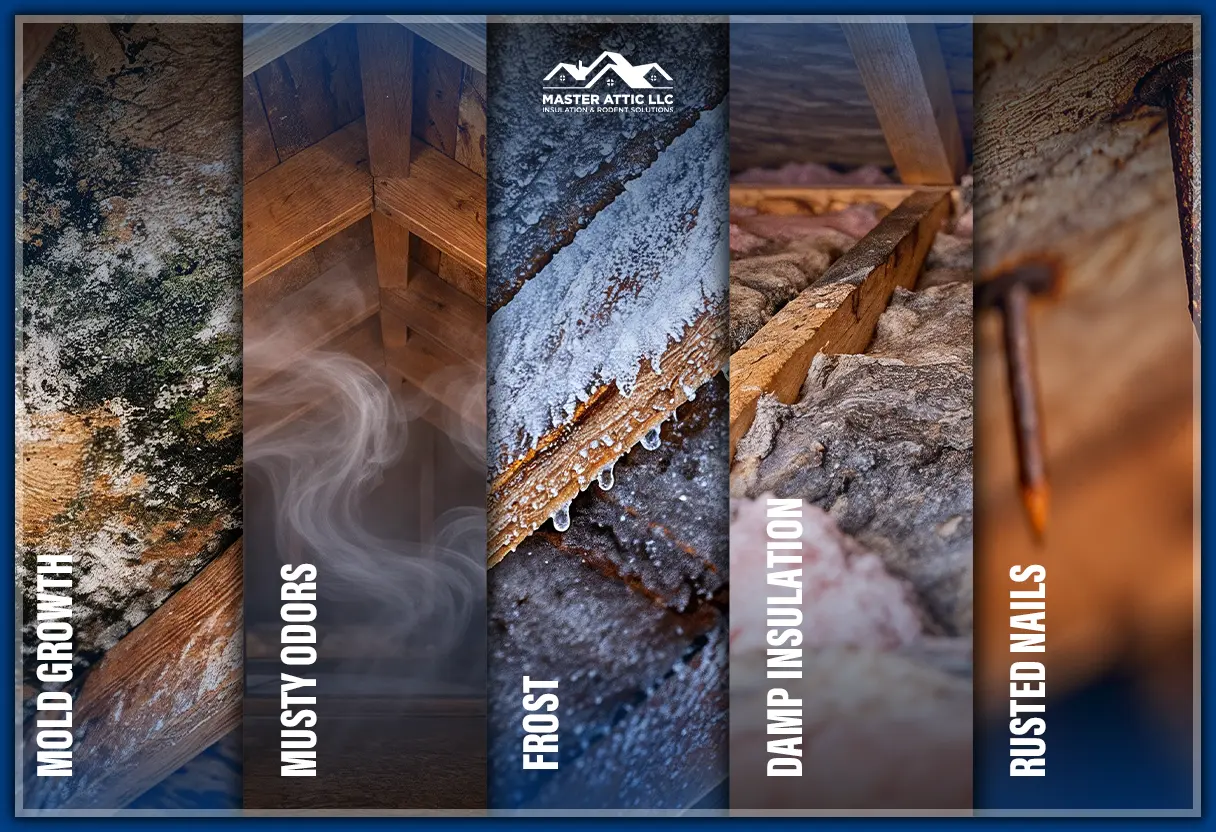
Mold Growth: Dark streaks, stains, or fuzzy green or white patches on the underside of the roof or attic frame rafters and beams are indicative of attic mold growth, and most likely due to attic humidity!
Musty Odors: Trust your nose; it knows there's an attic moisture problem! The musty scent in the attic comes from the breakdown of organic mold compounds. The musty odor can drift down into the living space, reducing indoor air quality and triggering allergies in household members.
Condensation and Frost: When the warm sun sets in autumn, bringing cool nights, there can be visible frost on the attic frame rafters. When frost forms on cool nights and thaws in the light of day, repeated freezing and thawing can drive moisture deep into the wooden attic frame, showing up as attic condensation and eventually attic mildew or mold growth, or dripping onto the attic insulation.
Damp or Compressed Attic Insulation: When the fiberglass batt insulation gets repeatedly wet by attic moisture, it loses its lofty character. Damp attic insulation begins to look gray and matted and smells stale.
Rusted Nails: The nails holding down the shingles on the roof deck have the nail tips showing in the attic. When these nail tips show notable rust, it's a good indicator that attic humidity is consistently high and causing attic condensation.
What Are Other Ways Fall Moisture Brings Damage To The Attic?
In a previous article, Signs Summer Heat Damaged The Attic, we described how prolonged hot summer temperatures can bring heat damage to the attic, especially when there are attic ventilation problems. Excessive trapped summer heat can damage the attic, and excessive attic moisture can damage it in fall, causing attic mold growth, attic mildew, a musty attic smell, rusty nails, and damp attic insulation that lowers the R-value of the insulation. Some other examples of attic damage due to fall moisture include:
Soft or Sagging Roof Deck Boards: If the internal roof decking feels soft or spongy, it means attic moisture has brought about wood rot, and not merely staining. If the inside roof decking bows - or dips - it signals advanced moisture damage.
Weakened Floor Boards: Attic floor boards appearing warped, sloped, or lower in some areas than surrounding floor boards, such occurs when there is excessive attic moisture and dampness.
Pest Intrusion: The tiny air leaks that bring warm moisture-laden air to escape into the attic are the same air gaps that provide attic pests entry; pests that like to breed in that soft attic insulation, chew attic beams, or electrical wiring.
Hire The ‘Fall Attic Peeper’ Providing An Attic Moisture Inspection
Attic moisture inspections by professional, licensed attic technicians is more than just a ‘sniff test’ for musty air or green mold, or looking for roof leaks. Trained attic professionals follow a clear process for every attic inspection, including an attic moisture inspection. The first question in the mind of attic professionals: ‘Is the moisture caused by condensation or a 'simple' leaky roof?’ If attic condensation is the attic moisture problem, it can be caused by poor attic ventilation, poor attic airflow, attic air leaks, or high attic humidity from warm, moisture-laden air escaping into a cool or cold attic.
The process for an attic moisture inspection includes:
Initial Consultation With Homeowner: A discussion asking questions about household HVAC warming and cooling issues as well as the local weather conditions for the home’s location. (excessively cool or warm or rainy) After the initial consultation, the professional attic technician proceeds to do a:
Visual Interior Inspection: Examining roof sheathing, aka roof decking, attic framing, and ceiling joists for stains, wood rot, or wood warp, as well as rusting nail tips of nails used for external roof shingles, and checking for compressed or damp insulation and depth of the attic insulation.
Visual External Inspection: Examining rooflines for shingle damage, air gaps surrounding the flashing around chimneys, and soffit and ridge vents for blockage.
Inspecting For Proper Balanced Attic Airflow: This involves ensuring adequate soffit vents at the eaves and ridge or gable vents at the roof ridge, and that bathroom, kitchen, and dryer exhaust fans terminate outside the home, not in the attic space.
Moisture Testing: The use of moisture meters to examine wood framing, roof sheathing, and attic drywall.
Contact Master Attic For All Attic Services
Contact the licensed, insured attic professionals at Master Attic, providing a full range of attic services to New Jersey and Pennsylvania residents for 25-plus years! Attic services include attic insulation removal,
installing new attic insulation, such as batt or blown-in attic insulation, and resolving attic ventilation problems, with air sealing, installation of baffle vents and radiant barriers, as well as attic air duct repair and replacement.