How To Clean & Sanitize The Attic Space!
The best way to describe that dark, dusty upper room of a house, known as the attic space, is to borrow some of the words of the theme song written for a TV family of the 1960s — The Addams Family! Attics are ‘creepy,’ ‘spooky,’ and somewhat ‘mysterious,’ especially when one hears something moving up in the attic. The attic is also ‘ooky’ —
a slang word to describe something as being disgusting, slimy, and sometimes with an unpleasant odor caused when animals take a liking to your attic — and make a ‘cozy’ nest in the attic insulation, while also leaving their ‘droppings’ and urine to contaminate the insulation! Attic odors can also be caused by water leaks from pipes or by large or small animals chewing or gnawing the roof shingles to gain entry. Leaks can lead to mold growth, which can cause respiratory allergies. No better word to say it: ‘OOKY’ — and the reason for this article on cleaning and sanitizing the attic space!
Table of Contents
Attic Cleanup Process
To ensure the family’s home environment is free of all contaminants, such as dust, mold spores, rodent feces and urine, insects, or bird feathers — DIY methods such as vacuuming or wiping with ordinary cleaning solutions by the homeowner are not recommended. Cleaning and sanitizing the home attic is a process that is best performed by attic professionals with 25+ years of knowledge, experience, and understanding of rodent proofing. air duct sealing, attic insulation removal, and new insulation installation. The professionals trained in attic restoration will come dressed for the job with:
- Disposable coveralls: Specialized Tyvek suits to protect skin from fiberglass and bacteria, and taped at the wrists and ankles for a tight seal.
- Respirator: a full or half-face respirator with HEPA filters so as not to breathe in airborne contaminants.
- Eye Protection: sealed safety goggles to protect eyes from sanitizer sprays, dust, and feces particles.
- Gloves: nitrile, latex, or heavy rubber gloves that extend over the Tyvec suit.
- Footwear: rubber work boots that can be disinfected after the job is complete and disposable shoe covers.
Cleaning a home attic is a complex process that involves removing the aftermath of rodent infestation or mold growth. The professional cleaning of the attic requires the removal of such harmful and useless materials from the attic as:
- The contaminated insulation.
- Rodent feces and urine. The CDC, Center for Disease Control and Prevention, explains how critical it is to remove these substances because of the health risks they pose.
- Mice and rat nesting material and live or dead rat carcasses.
- Removal of any mold-covered and water-damaged material such as boxes and books, bookshelves, and furniture.
From Attic Cleaning To Attic Sanitizing
Attic restoration professionals often employ the following equipment to sanitize the attic:
- Aerosol disinfectant fogger: often used to eliminate specific flying insect infestations, but does not prevent future insect infestations. Aerosol fogging will effectively spray a fine mist of EPA-approved disinfectant over a large, open area and into hard-to-reach cracks and air vents. Attic fogging should only be used by trained professional technicians. The spray propellant is highly flammable; all pilot lights, open flames, and electrical equipment should be shut down to prevent explosions. Home residents need to evacuate the house for two to four hours. After fogging, the attic should be ventilated for at least two hours by opening windows before proceeding with attic cleaning.
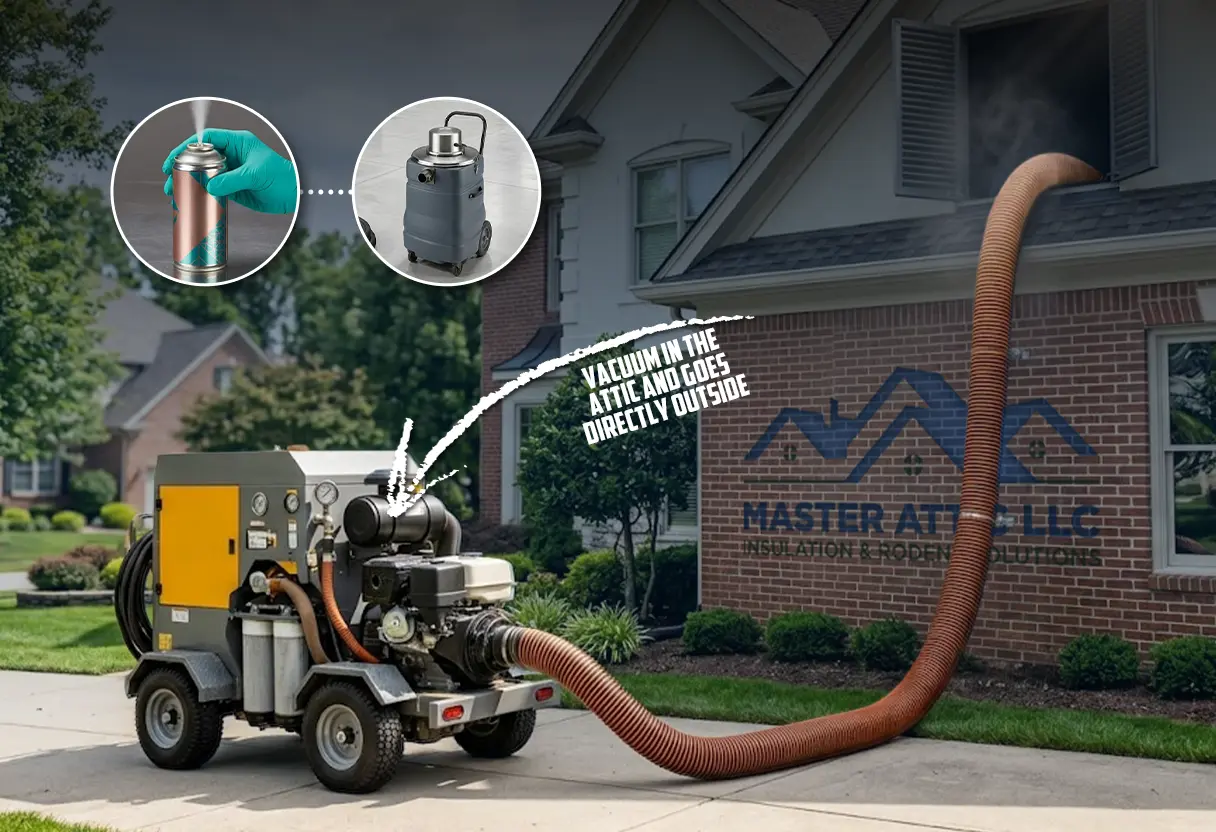
- Industrial-grade vacuums: When animals as squirrels, mice, rats, and bats, and raccoons make cozy nests within the soft attic insulation or in the dark corners of attic floors and rafters, removal of the ‘droppings’ and urine also requires the purifying of the contaminated attic air before the contamination spreads through the attic ductwork. As detailed in How To Get Rid Of Rats In Attic — FAST, rats and mice carry diseases such as Hantavirus and other bacterial and viral diseases that can contaminate the attic air space! Master Attic technicians use high-powered industrial-grade vacuums in the ductwork and hard-to-reach areas, to ensure dust and debris does not go through the ductwork and into the residential living spaces of the home. Such vacuums are set on a collection unit outside the house, with a long hose running up into the attic, to ensure that hazardous materials such as mold spores, contaminated fiberglass, cellulose, or asbestos-containing vermiculite insulation, and pest droppings are safely removed.
- UV light systems: In very specific situations, UV light technology can be used to sanitize bacteria, viruses, and fungi, preventing their multiplication. The effectiveness of such technology is in using the correct wavelength of ultraviolet light to target exactly where microbiological germs hide. The UV system device must be fully enclosed in sanitizing pouches or placed within an empty room, as UVC light is dangerous to human skin and eyes.
Final Step Of Attic Cleanup And Sanitizing — Chemical Disinfecting!
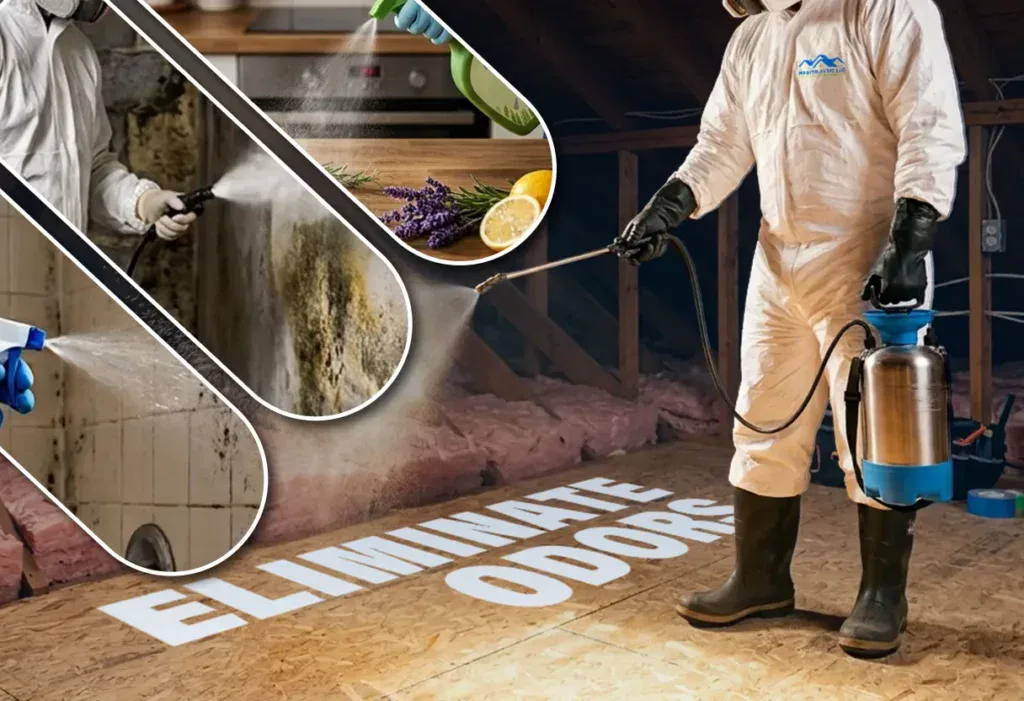
The final step in deep cleaning the attic is to eliminate the ‘ooky’ of disgusting, slimy, and unpleasant odors with EPA-approved chemical disinfectant solutions that address specific issues.
- Botanical Disinfectants: These professional disinfectants kill 99.99% of bacteria and viruses without rinsing, nor do they leave harsh synthetic residue.
- Antimicrobial Sprays: These are concentrated DSVs, disinfectants, sanitizers, and virucide solutions to decontaminate compromised environments and eliminate odors.
- Bleach and Water Disinfectant Solution: This is a spray mix of 1.5 cups of household bleach to one gallon of water for killing any mold spores, bacteria, and viruses.
FAQs Regarding Attic Cleaning And Sanitizing
Should a homeowner vacuum or sweep up rodent droppings?
Absolutely NOT! Sweeping will cause the contaminated dust and dried urine to become airborne, leading to various respiratory illnesses. Inhaling the odors of said excrement while vacuuming is to inhale the diseases present in rodent droppings, which is why professionals wear full protective gear, head-to-toe.
Does attic insulation need to be replaced after animals ‘invade’ the attic space?
If the insulation is heavily soiled, yes — replacing the insulation is a wise decision. Acidic urine damages the structural integrity, of the insulation and the slightest remaining scent will attract animals back.
What Can Be Done To Ensure Animal ‘Invasion’ Does Not Reoccur?
To ensure animals do not take up residence in the attic space in the future, the attic restoration professional will examine and seal all entry points before beginning the cleaning and sanitizing!
Contact The Pros
An animal infestation or mold in the attic raises many questions. Make no assumptions about whether the problem is simple or complex. Contact the pros who know how to take the ‘creepy,’ ‘spooky,’ and ‘ooky’ out of the attic space with a full attic restoration that includes cleaning, sanitizing, and disinfecting! Master Attic technicians are the pros to call for every attic or crawlspace difficulty! Trained in giving the eviction notice to raccoons, squirrels, rats, mice, and bats, who like taking up residence in attics in New Jersey and Pennsylvania. In addition to rodent removal, Master Attic technicians ensure contaminated insulation caused by animals living in your attic is removed and replaced with new insulation. Master Attic also understands the importance of rodent-proofing the attic by identifying and sealing off entry points. Don’t wait — contact Master Attic via our website form or EEEE-mail us at info@masterattic.com.