
Attic and Crawlspace Winter Rodent Proofing Tips For New Jersey Homes
Winter in New Jersey can be harsh. Homeowners are constantly struggling to find ways to keep the chill out, stay warm inside, and battle with the elements. Unfortunately, the same can be said for your neighborhood rodents and other outdoor pests.
Winter is a harsh and dangerous time of year for these vulnerable critters, so they naturally begin looking for warm places to ride out the season as well. Another unfortunate fact is that attics and crawlspaces are prime targets for animals like mice and rats to seek reliable shelter from the cold.
Rodent infestations can lead to property damage, contamination, and even health risks for your family. In this guide, we will walk you through some of the top winter rodent-proofing tips and how to protect your home before the cold season sets in.
Table of Contents
Why Rodents Target Attics and Crawlspaces in Winter
Even if your home is generally rodent-free, winter changes the circumstances, and rodents become much more motivated to find a reliable place to sleep and stay safe. These are some of the reasons why your local mouse family might try to infiltrate your attic:
- Seeking Warmth: Attics and crawlspaces provide ample insulation and warmth, protecting rodents from snow, ice, and cold temperatures.
- Access to Food: Rodents are opportunistic. Even small crumbs, pet food, or stored pantry items can attract them. In desperate times, they might even chew through your belongings on the hunt for sustenance.
- Hidden Shelter: Crawlspaces are dark and secluded, giving rodents a safe place to nest without worrying about potential predators.
Even if you have never seen a mouse or rat in your home before, it’s essential to keep an eye out when the temperature dips.

Signs you might have rodents include:
- Small droppings along baseboards or in corners
- Chewed insulation, wires, or wood
- Strange scratching or scurrying sounds at night
- Musty or ammonia-like odors in attics or crawlspaces
Early detection is key to preventing a full-on infestation. Rodents reproduce quickly, and one pair of mice can become dozens in just a few months.
Step 1: Inspect Your Attic and Crawlspace
Before taking preventive measures, conduct a thorough inspection of your attic and/or crawlspace. Check potential entry points around vents, rooflines, plumbing pipes, and walls to identify gaps or weak points. Mice can squeeze through openings as small as a dime.
Next, take a look at your insulation and air sealing. Rodents often nest in loose insulation or can get into your home through worn caulk or deteriorating seals. If you are concerned about your crawlspace, inspect the vents and perimeter of this area to check for gaps or cracks.
Step 2: Seal Entry Points
Once an entry point is identified, you have to do something about it to ensure it is sealed! Use steel wood or caulk to block small gaps. Rodents cannot chew through steel wool, which makes it a great deterrent in small areas.
If they are getting in through a vent, consider installing a vent cover with a mesh screen. The mesh material is gnaw-proof while still allowing necessary airflow.
If the entry point is large or if you know rodents are getting in but can’t figure out where, invest in a professional attic inspection. A trained team has the knowledge and tools necessary to track down even the smallest entry point. They will do a full inspection from top to bottom and could even identify additional spots that would have otherwise gone unnoticed.
Step 3: Remove Water and Food Sources
Rodents need food and water to survive, and they will become desperate when resources are limited. Take a look around your attic and crawlspace and identify any potential water or food items. If you use your attic to store pantry items, pet food or bags of birdseed, find a new location to house them or invest in rodent-proof storage solutions.
Also, you might not think twice about the slow leak in the corner of your attic or crawlspace, but that water could become the difference between life and death for a mouse! If you have moisture in these spaces, you will soon find an infestation there, too. Seal up any leaks and address any property damage before it gets really cold.
Step 4: Use Rodent Deterrents and Traps
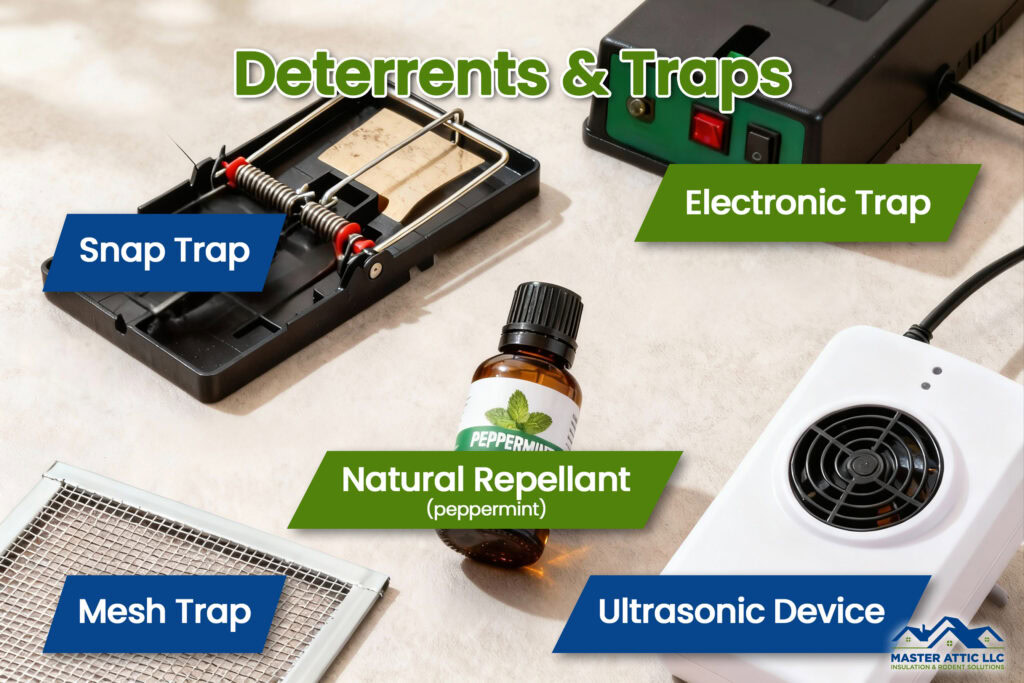
Once the environment is less inviting, you can add deterrents to help keep the mice and rats from settling down in your attic:
- Snap or Electronic Traps: Effective for small infestations in confined areas.
- Trim Trees and Shrubs: Ensure branches aren’t touching your roof or siding. What is a simple branch to you is a bridge to your roof in the eyes of a mouse!
- Clean Gutters: Standing water or debris can attract pests near your foundation.
- Professional Assistance: For persistent infestations, consider hiring a pest control or winter rodent-proofing service.
Stay Rodent-Free This Winter With Master Attic
Winter rodent invasions in New Jersey homes are common, but proactive attic and crawlspace rodent-proofing can prevent costly damage, contamination, and health risks. By inspecting your home, sealing entry points, removing food and water sources, and maintaining vigilance throughout the season, you can enjoy a warm, rodent-free winter.
Now that you know some of the most helpful winter rodent-proofing tips in New Jersey, call on the team at Master Attic to take care of the problem for good.
Don’t wait until rodents take up residence in your attic or crawlspace. Schedule a professional inspection with Master Attic today to safeguard your home before the winter chill arrives.