Why Do Animals Like Attics?
The peace of one’s quiet home is as heaven after any given frantic work day and the horn-honking traffic to and from home. A peaceful quiet amidst the common sounds a homeowner expects to hear: the squeak of a certain step when going up the stairs, the squeak of a floorboard as one walks on certain floors, the ever slight drip of a faucet, pipes ‘knocking,’ the tick and tock of a certain clock, refrigerator buzz, roar of the furnace turning on, or the
air-conditioner running: all the accepted sounds which, ironically, provide contentment and peace, of being home
after a long work day!
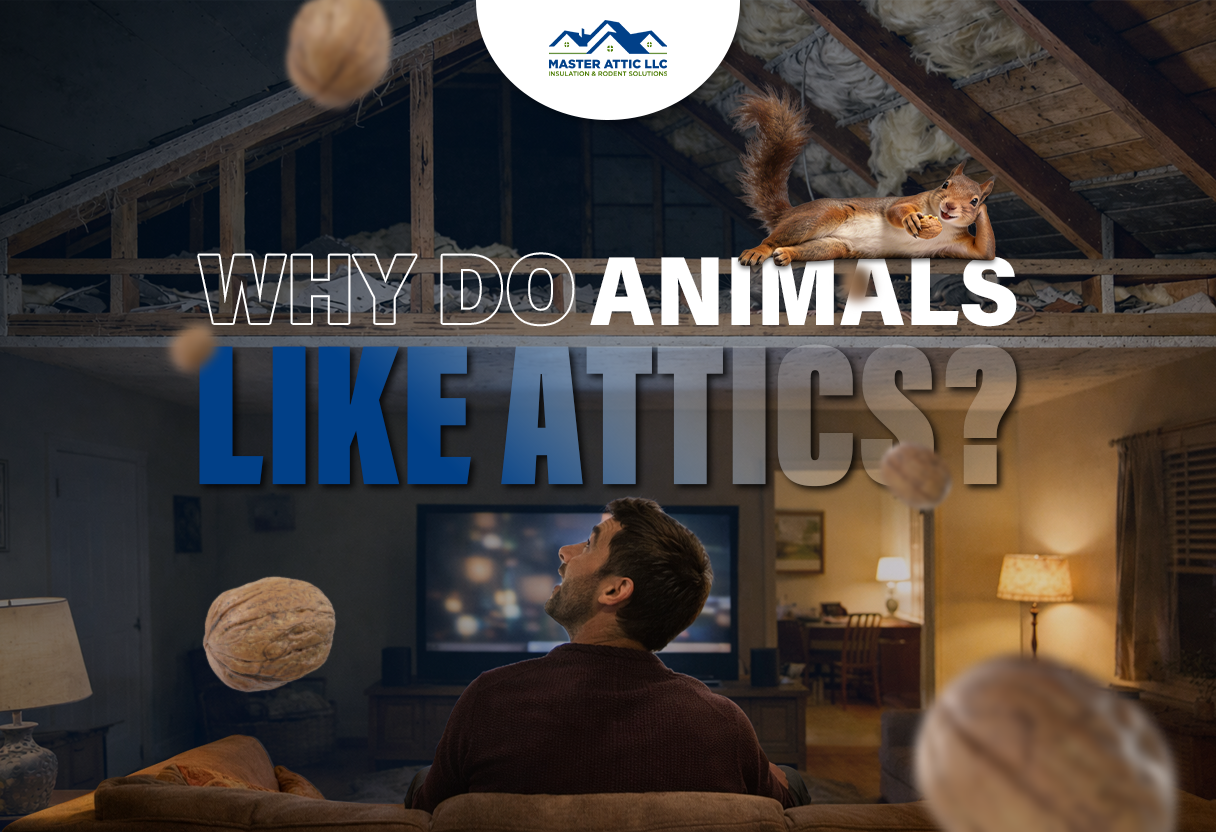
Then, amidst all the other sounds, comes a sound the ears pick up as unusual. A sound more frequent as dusk approaches, and one is settling into the soft and comfy recliner. Sounds like: thumping, banging, or knocking, gnawing, scurrying, scratching, scuffling, squeaking, fluttering, or chirping. Nothing more needs to be said: it’s disconcerting, primarily because we don’t know what it is. We at Master Attic won’t keep you in suspense: those unusual sounds heard seemingly behind walls or from ceiling overhead are the sounds of an animal or animals in the attic, who also want a peaceful, safe, warm, and quiet home, away from the outside noise.
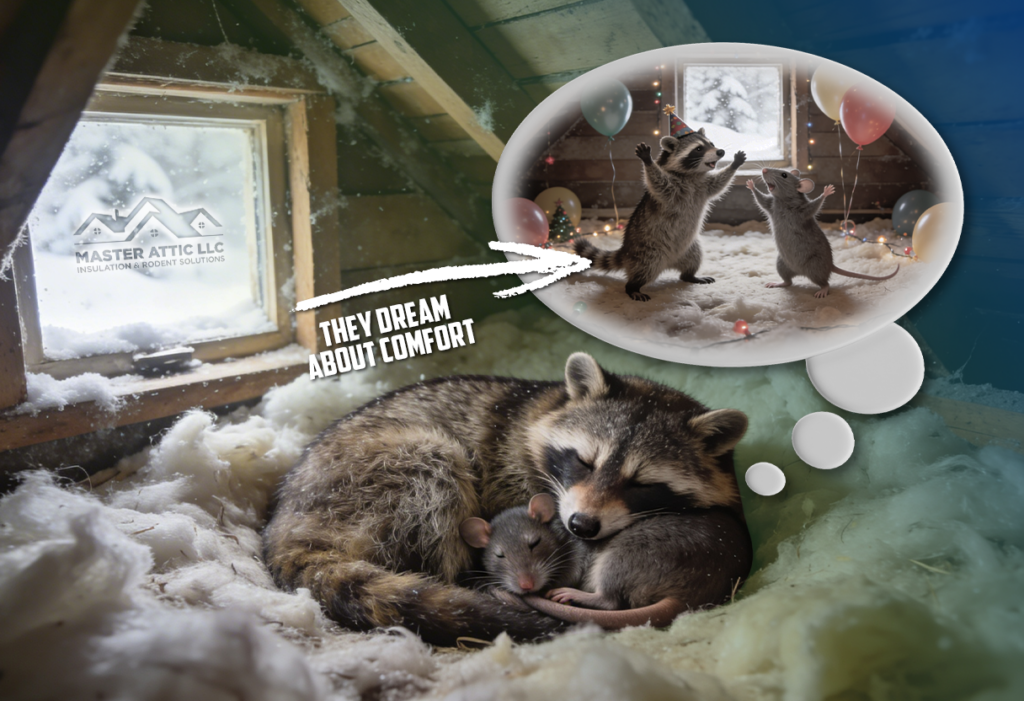
Table of Contents
Why Do Animals Like Attics?
Why are animals attracted to the attic space? Simply put: as you, the homeowner, want a quiet place to recuperate from the frantic pace of the work day and noisy traffic, those ‘cute’ creatures of nature want a peaceful, warm, and quiet home, away from the outside noise. As much as you may like nature, we can understand if you give an angst cry of WHY! Why your attic? Why any attic? Why do animals like attics? The four common reasons animals like the attic space:
- The warmth from a cold winter: Just as humans want warmth when the temperatures plummet in winter, nature’s creatures also seek to get in from the cold winds and snow. As Shakespeare’s Romeo stated: ‘What light through yonder window breaks?’ This line Romeo speaks of his beloved Juliet, a light and a life-giving force to him. Such a life-giving force as the light that shines through an attic window to attract the rodents, squirrels, and raccoons who scamper across the roof shingles, warmed by the heat that radiates from the attic to the exterior roof, or by the heat flowing from roof vents and attic soffits! They sense there’s warmth and ‘see the light’ of escaping from the frigid cold of winter!
- Protection from predators: The predators of mice, rats, and squirrels are foxes, snakes, cats, and large birds, such as hawks. The raccoon’s predators would be carnivorous creatures such as coyotes, bobcats, black bears, wolves, large dogs, owls, and eagles. A rodent, squirrel, or raccoon has an instinctive knowledge of how to escape their ground-based predators. They can climb high for the sake of safety! If such animals want entry to that warm attic space, they find the way! Common entry points include soffits, eaves, and construction gaps. Raccoons can tear through roof shingles, and mice need a very small opening, often no bigger than a dime.
- A place to breed and nest their young: Animals like the attic spaces because of such spaces being warm, dark, and quiet, and away from humans! Attic spaces are the perfect spot for the female wild animals to set up a cozy nest to give birth in! Within the attic insulation, one will find the nests of mice and rats, which make holes 3 inches in diameter. Squirrels carry nest material into the attic and also use insulation to keep the baby squirrels warm. The large raccoons can tear out large areas of insulation to make dens for their young. The nests of such fine-feathered friends as sparrows, starlings, and pigeons are found in attic insulation near vents. Bats usually roost in the rafters, but they can also build nests in the soft attic insulation. Animals that like attics come in for warm shelter in winter, for a haven from predators, and, in spring, raccoons and squirrels use this comfortable environment to breed, create nests, and await the birth of their young.
- Easy access: Animals like attic spaces when there is easy access to entering, such as tree branches that overhang the roof area, a quick dart up the leaders, aka downspouts, that lead to roof gutters, and a torn attic screen is a temptation that no shivering creature can resist! Squirrels, bats, and rats will look for eaves-to-roofline gaps to gain access to the attic space. If the gap is not quite large enough, it’s no problem for animals to chew or gnaw a larger hole! The front paws of a raccoon that feature long and strong digits similar to the fingers of the human hands make it easy to grasp small protrusions and building textures, such as the exterior brick of homes, and amazingly can scale a two-story brick wall in under 10 seconds by ‘hopping’ or ‘hitching’ their way upward! The flexible ankles of raccoons also allow them to descend vertical surfaces headfirst safely!
Common Creatures Found In Attics
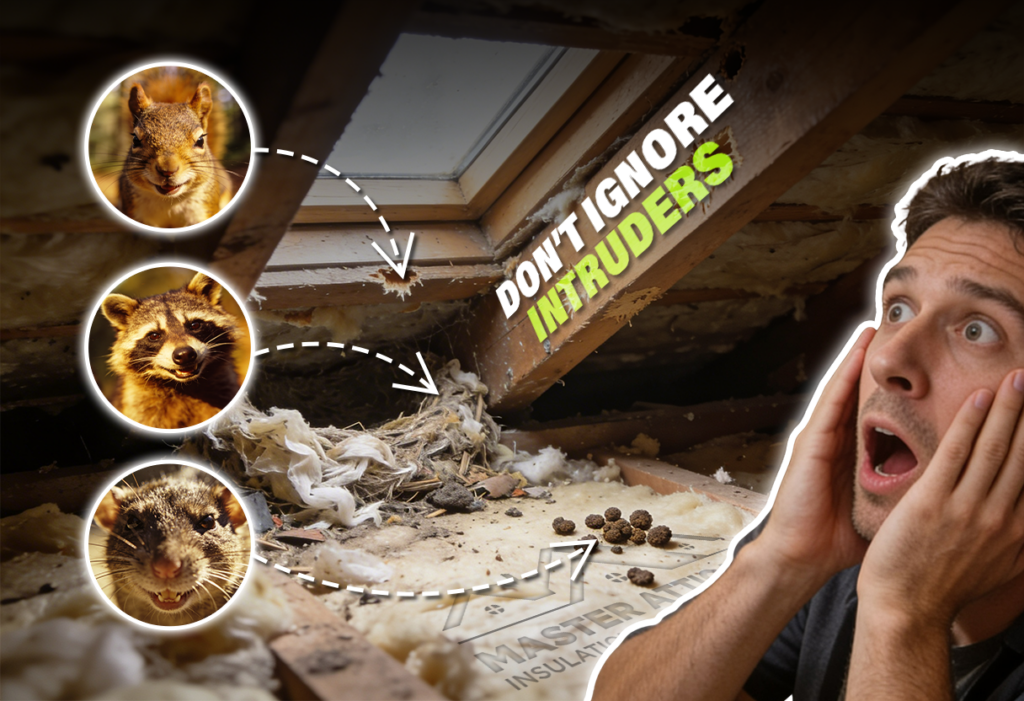
The most common creatures Master Attic contractors find inhabiting NJ and Pennsylvania attics:
- Squirrels: The grey squirrel is the animal that is most commonly found in the attic! Squirrels in the attic are active by day, with homeowners hearing the pitter-patter of those tiny feet, as well as scratching, thumping, and the chittering of their voices.
- Raccoons: The next common animal to like attics is the raccoon. The female raccoon is likely to enter attics in spring, looking for a safe place to build a nest. Raccoons in the attic are most active at night, and homeowners will hear thumping, scurrying, and gnawing sounds. Growling, snarling, and thumping sounds might be heard when baby raccoons grow and wrestle with each other. An attic raccoon leaves large ‘droppings’ and large destruction of walls and roofing.
- Bats: An attic bat will fly in and out, dusk to dawn. Bats are nocturnal and leave the attic roost at dusk to feed, and homeowners are likely to hear scratching and see them exiting roofline gaps. At night, they may return to the roost to rest and digest before heading out a second time before dawn breaks. They will be mostly asleep and silent by day. Light chirping or scratching may be heard during the day as the bats shift position to regulate their body temperature. Small piles of bat ‘droppings’ are found in one area of the attic, and leave a very unpleasant scent.
- Rodents: Mice and rats are most active at night. As the homeowner relaxes in the recliner, they hear the mice’s skittering feet on the ceiling above them, along with the sounds of scratching and gnawing. Rodent droppings are very obvious.
- Birds: The birds are prone to flying into the shelter of the attic space during nesting season. They leave their ‘droppings’ and feathers as signs of their presence. Homeowners will hear scratching, shuffling, and the fluttering of wings, along with chirping and cooing. Birds are most active in early a.m. and evening.
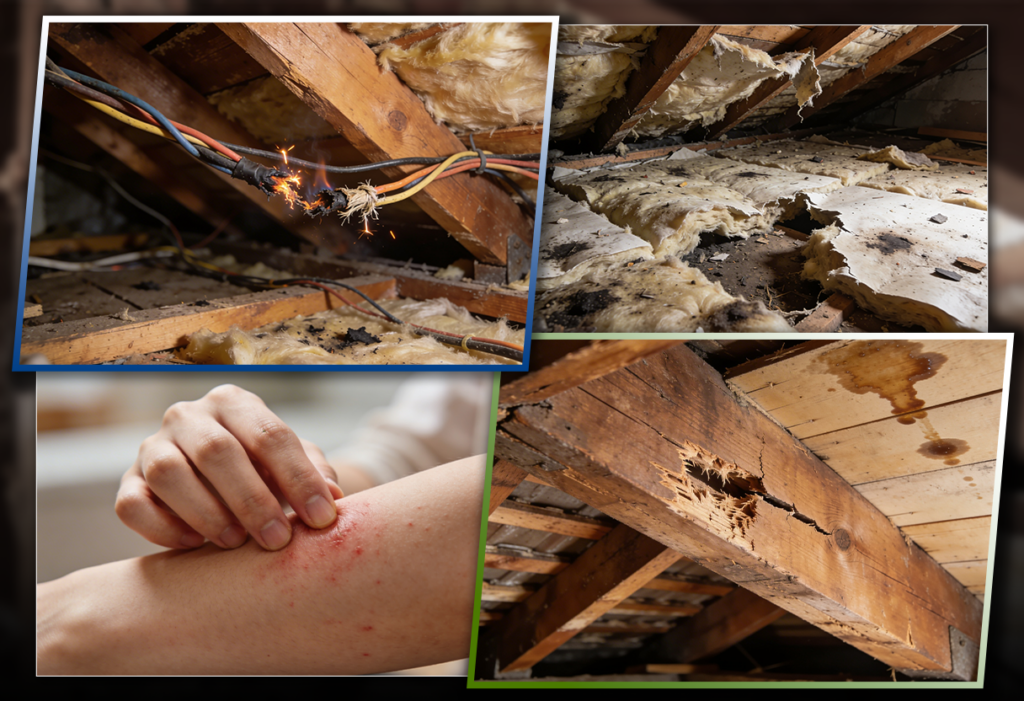
When Animals Make Your Attic Their Home: Eviction Must Be!
While initially a little mouse or bird or squirrel within your attic space and the ‘family treasures’ you have stored there may seem ‘harmless and cute,’ wise homeowners know that such requires the quick action of eviction. Animals residing amidst the rafters bring such problems as:
- House Fire: When animals gnaw and chew, they often chew and damage the electrical wiring, resulting in a house fire.
- Structural Damage: Such gnawing on the beams of the attic or the frame of the house, or soffits, or vents can weaken the structural integrity of the house. Initial chewing of roof shingles to gain access to the attic can lead to roof leaks and water damage to the home.
- Attic Insulation Damage: Animals building a nest in the attic insulation tear up the insulation, and compress the insulation resulting in heat loss in the home, the ‘droppings’ and urine in insulation can bring varied diseases from whatever animal contaminated the insulation: Histoplasmosis from bats brings fever, chills, headache, and chest pain and in severe cases chronic lung disease similar to tuberculosis. Leptospirosis from raccoons brings high fever and chills, headaches and muscle aches, jaundice, upset stomach, and in severe cases, kidney and liver damage and meningitis. Hantavirus from rodents brings shortness of breath and cough, leading to respiratory failure that can be fatal. Salmonella, in severe cases, can lead to typhoid fever, but at lower levels, it can cause stomach cramps, fever, nausea, vomiting, chills, and headache. Damaged insulation inhabited by animals can lead to severe odors in the home.
- Viral Disease: The natural response of an animal is to defend ‘their home,’ especially when protecting babies in the nest, and this can bring home residents, of adults or children, to be bitten, with the bite bringing about the viral disease known as rabies.
- Parasite Infestation and Disease: Animals of the wild carry fleas, ticks, and mites that can enter the family living space. Tick bites can transmit Lyme Disease; fleas can cause intense itching and skin irritation in humans and pets; and mites can cause a disease known as Scabies, which causes intense nighttime itching, rash, and raised burrows found in finger webs, wrists, and skin folds.
Contact The Pros Who Know
Animals in the attic space should never be a DIY project! Call Master Attic, we are the pros in giving the eviction notice to raccoons, squirrels, mice, and bats, who like taking up residence in attics in New Jersey and Pennsylvania. In addition to rodent removal, Master Attic technicians ensure the attic is fully restored with attic sanitizing, removal of contaminated insulation caused by animals liking your attic, and installation of new insulation. Master Attic also understands the importance of rodent-proofing the attic by identifying and sealing off entry points. Don’t wait, contact Master Attic, licensed attic and crawlspace professionals, serving New Jersey and Pennsylvania for
20 + years!