
Signs Summer Heat Damaged The Attic
How Does The Hot Outdoor Temperature Damage An Attic?
Summer 2026 in New Jersey will long be remembered in one word - HOT! A triple-digit heat wave hit NJ residents the first week of July, peaking July 3 and July 4, putting a damper on 4th of July events honoring the 250th birthday of America! While extreme heat in the triple digits, or even prolonged HOT summer temperatures above 90 degrees, can bring a range of physical problems to the human body, it may not be as well-known what prolonged hot summer temperatures can do to the attic space of a home. Attic heat build-up in attics because of poor attic ventilation will show the following signs of heat damage to the attic: inefficient attic insulation, damaged roof shingles, ineffective HVAC system bringing higher electric bills, and damage to the wood frame of the attic roof. Excessive attic heat is also the major cause of attic fires. In this article, Master Attic will explain the attic problems caused by excessive attic heat and how to prevent summer heat damage to the attic.
How to Measure Excessive Attic Heat In NJ Attics
Ideally, the attic space in summer should be about ten to twenty degrees warmer than the outdoor temperature.
If the outdoor temperature is 90 degrees, the attic temperature should be approximately 100 to 110 degrees. If the temperature exceeds 110 degrees, poor attic ventilation is causing an airflow problem.
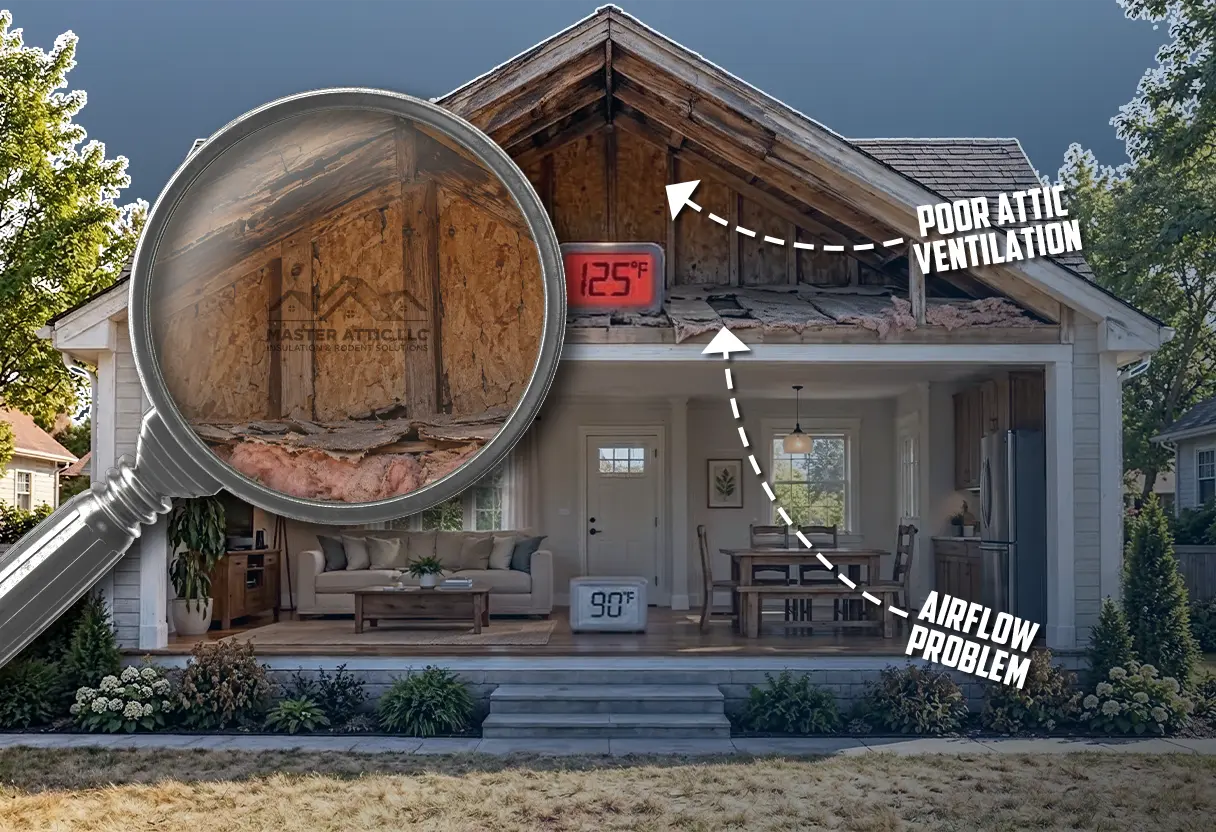
A properly ventilated attic has a combination of intake vents, placed low at the soffits or eaves of a house, pulling in 'cooler' and 'drier' outside air into the attic, along with exhaust vents near the roof ridge, allowing for the natural escape of the warm and humid attic air. This process, known as convection, transfers warm attic air out while bringing in cooler intake air. The varied vents in the attic space:
Ridge Vents: Found along the peak of the roof and covered by roof shingles or exposed along the roof line.
Soffit Vents: Found at the eaves of the attic.
Gable Vents: Found within attic walls at gabled ends of the attic and function as both intake and exhaust vents.
Rafter Vents: Ensure a channel for outside air to freely move into the attic at the soffits and out through the gable or ridge vents.
Excessive attic heat and summer attic heat damage in attics in summer is all about trapped attic heat. The trapped attic heat subsequently brings about a 'baking' of the roof sheathing, aka roof deck, comprised of plywood panels for the purpose of installing roof shingles. Signs of roof sheathing damage include warped roof sheathing, curled or blistered roof shingles, and premature shingle aging.
Attic heat is trapped in the attic because of:
Blocked Attic Vents: Attic vents get blocked when loose fill or blown-in insulation shifts and gets lodged into the eaves, or when leaves and other outside debris build up in the exterior gable vents or on the roof shingles, minimizing the amount of heat that can escape the attic.
Soffit Vent Obstruction: Active attic pests, such as birds, build nests in intake vents known as soffits, or among the attic rafters causing a blockage of the air intake vents known as soffits.
Does Attic Humidity Cause Attic Damage?
Yes, it does, when the wood-framed attic rafters are painted or sealed with non-breathable sealants, a vapor barrier forms over the porous 'holes' of the wood frame, causing moisture build-up in the wood-framed rafters and beams, and causing wood rot and deterioration of the home's structural integrity.
When the humid outside air enters through soffit or other vents of the attic, there comes not only a HOT attic but an attic with a large amount of water vapor known as humidity, causing:
Attic Condensation on walls and windows: Humidity in a hot attic space shows up as condensation, which appears as water stains and streaks on drywall in the attic. As the condensation flows down the wall, the wall
of the attic begins to crumble from the attic condensation. Condensation in the attic will damage insulation, decreasing the insulation R-value that keeps the attic cool in summer or warm in winter. With condensation on windows, you may see wood rot on the window sills and frame, and metal hinges, window locks, and screws may start to rust. Over time, attic condensation can lead to mold and mildew growth on the surface of the drywall and hidden within the wall, and an eventual musty attic smell will come to be.
How Does Excessive Attic Heat Hinder The HVAC Cooling System?
Thank goodness for the AC system of a house when summer temperatures are soaring - but when there is poor attic ventilation and attic heat is building up, the home HVAC system is going to work harder to cool the living space of the house, as the trapped attic heat radiates down to the ceiling of upper rooms of the home, causing uneven temperatures throughout various rooms in the house. Additionally, the AC's cool air flowing through the ductwork will absorb the attic heat. When the AC must run continuously to remove the added heat flowing from the attic, the AC consumes more energy, which is noticeable when reviewing the next home electric bill.
How Does New Attic Insulation Improve Energy Efficiency?
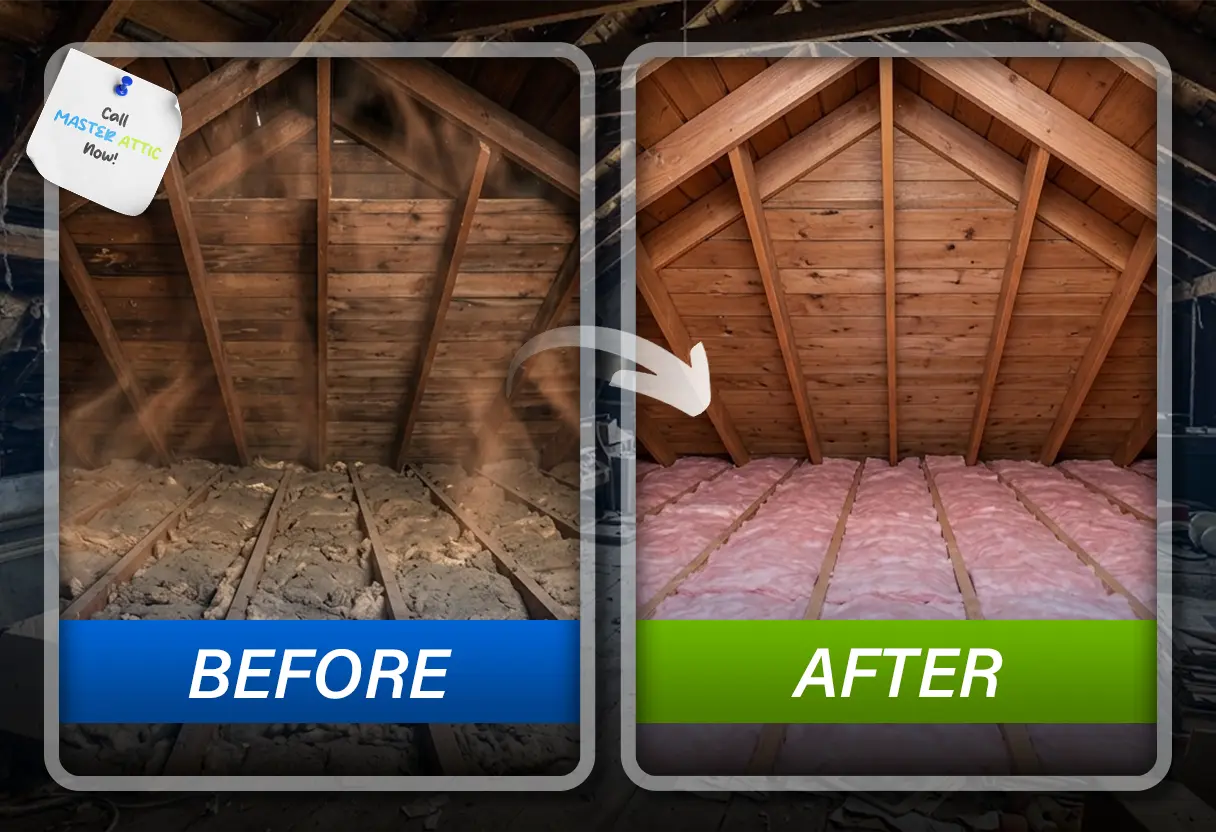
The best means to reduce the transfer of attic heat into the home, and keep the cool outdoor air in the attic as hot air escapes through ridge or gable vents, is with new attic insulation with a proper insulation R-value. R-value means resistance value of how well the insulation blocks the heat of the summer, or cold of winter, from radiating down and entering the attic and into other rooms of the house. New attic insulation can save 15% on heating and cooling costs, or an average of 11% on total energy costs.
What Are The Other Solutions For Preventing Summer Attic Heat Damage?
Some practical solutions to prevent summer attic heat damage and attic overheating are:
Radiant Barriers: A radiant barrier is a form of insulation that works by reflecting, rather than absorbing, radiant heat from the sun’s rays upon the roof deck. Radiant barriers work best in very warm climates and provide 30% or more cooler attic. This percentage is not the percent reduction in energy cost, but how much less radiant heat flows into the attic. Radiant barriers are best in attics without significant R-value foam or cellulose insulation. If the HVAC ductwork is in the attic, the radiant barrier will keep ductwork cooler in the summer.
Baffle Vents: Attic baffles are an effective means of ensuring consistent airflow in the attic. Attic baffles are foam or cardboard channels that extend from the attic floor along the eaves and up the underside of the roof deck, providing a path for ventilation air that flows in from soffit vents. Baffle vents keep the attic insulation from being blown and block soffit vents.
Balanced Attic Airflow: The objective of proper attic ventilation is to lower the temperature of an attic in summer and remove the moisture inherent in warmth, known as humidity! The hotter the air temperature, the more humidity, aka moisture, is in the air, and the greater the possibility of wood rot and mold growth. Proper attic ventilation requires understanding the 50-50 rule. The rule means balancing airflow in the attic with 50% low intake soffit vents at the eaves and high exhaust vents called ridge vents. Mixing different types of exhaust vents, such as installing ridge vents with static roof louvers or gable vents, should be avoided as that will pull air in the wrong direction.
Seal Air Gaps: Sealing attic gaps is not only useful for keeping out the ‘attic pests’ looking for a warm or cool place to build a nest; sealing attic gaps is just common sense to close the gaps that allow the hot air on the
outside - to 'leak in' to the 'cooler' conditioned air on the inside. Air gap sealing works best with properly and professionally installed attic insulation. Air gaps where heat leaks in are many and varied, from plumbing and electrical penetrations in walls to missing weather-stripping around attic windows or hatches, and small voids around recessed lighting and electrical fixtures. Sealing all air gaps is the first step before removing damaged insulation and installing new insulation.
Contact
Keep cool and avoid summer attic heat damage from a poorly ventilated attic space, by contacting Master Attic, the attic professionals, with 20+ years of experience providing New Jersey, Pennsylvania, and Delaware residents with many attic services - attic cleanup, rodent proofing, attic sanitizing, air duct repair and replacement, and attic airgap sealing. Master Attic professionals also handle commercial attic insulation & remediation, crawlspace & basement cleanup, and crawlspace encapsulation.