
Signs Attic Isn’t Ventilated Properly
What Are Signs Of Poor Attic Insulation?
A poorly insulated attic isn't just about feeling the cold in winter; inadequate or damaged attic insulation also means feeling the heat in summer and higher energy bills causing financial stress. The shivering or sweating homeowner is most evident when homeowner views the monthly heating or electric bill that comes to the mailbox! As was written in Signs Summer Heat Damaged The Attic, a poorly insulated attic can also bring about damage to roof shingles, a warped roof deck, known as roof sheathing, that the shingles are placed upon, curled or blistered shingles, and high attic humidity that brings excessive attic condensation, which is the cause of the musty attic smell and attic mold growth. Our article today will explain how a poorly ventilated attic fits ‘hand-to-glove’ with inadequate or damaged attic insulation.
What Home Problems Occur With Poor Attic Ventilation?
Proper attic ventilation means balanced airflow through the attic space. Proper attic ventilation allows outside air to flow in, circulate within the attic, and exit continuously, helping homeowners maintain a comfortable home environment by keeping attic temperature and humidity close to outdoor conditions. With proper attic ventilation and insulation, attic temperature should be no more than 10 to 20 degrees higher than the outdoor temperature. For every season, however, there is a reason for attic ventilation problems:
Spring
Spring Temperatures can range from cool to warm and bring the spring rains, increasing moisture in the outside air. When increased outdoor moisture mixes with attic heat build-up, attic humidity and condensation rise - setting the stage for attic mold and mildew growth, as well as that memorable musty attic smell amid the treasured memories stored up there!
Clogged Attic Vents: Soffit and roof ridge vent blockage occurs when the pollen, dust, and debris from
spring rainstorms harden onto the soffit and ridge vents - causing inadequate attic ventilation and
attic heat to build-up.Wet Attic Insulation: The trapped moisture from winter can bring about damp, and thus compressed,
damaged attic insulation which lowers the R-value of the attic insulation.
Summer
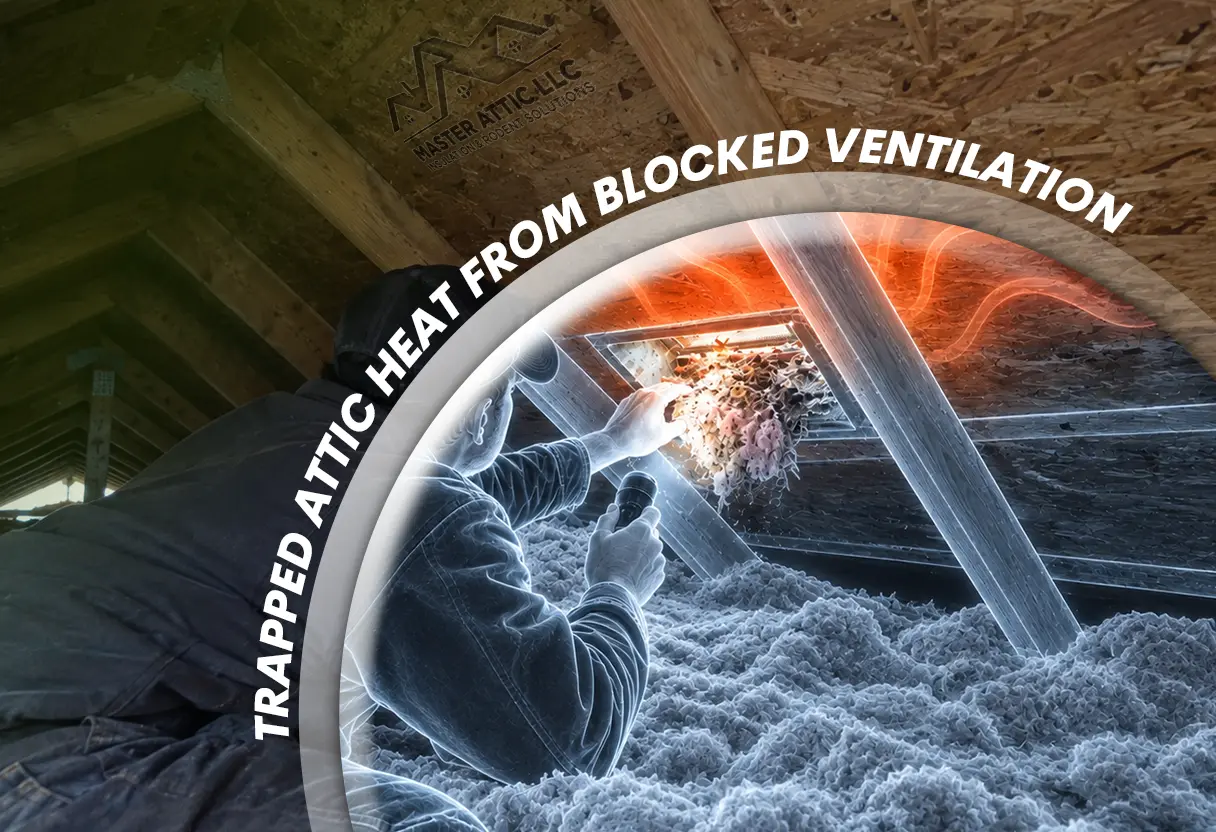
Extreme Attic Heat Trapping: Poor attic airflow and attic heat build-up in spring can lead toexcessive attic heat once summer arrives, with temperatures soaring to as much as 150 degrees Fahrenheit - causing the ‘baking’ of the asphalt shingles from underneath and shingles to prematurely age, curl, and blister!
High Energy Bills: The overheated roof deck causes the heat to radiate down into the home living space, bringing hotter rooms on the upper floor of the house, which brings about uneven indoor temperatures in the home living space, resulting in the home cooling system running longer and consuming more electricity, which brings the excessive ‘sweat’ when opening the monthly electric bill!
Weakening of Roof Structure: The excessive attic heat from within will bring about warping to the roof
deck (roof sheathing), softened sealants to the roof shingles, and rusting nails holding the roof decking.
Autumn
Leaf Debris Blockage: The beauty of those colorful, ‘falling’ leaves in autumn and the increasing blowing winds
can result in obstruction to low intake soffit vents, and blocking the chimney-effect airflow before the start of the
cold winter.Pest Intrusion: Soffit vent blockage is often the result of rodents or birds seeking shelter, as cooler weather approaches, from the poorly sealed attic vent openings. Pests can also damage attic insulation as they build warm nests.
Trapped Transition Moisture: When the home thermostat is raised due to cooler autumn temperatures, the warm air in the home living space rises into a cooler attic, creating added attic condensation on the roof deck and fasteners and bringing about the attic moisture build-up and attic condensation that can slowly destroy the
wood-framed structure of the home, bring soft or darkened wood along the rafters, or frost forming on nail tips. This attic moisture can then drip onto attic insulation and cause damage.
Winter
The only way to describe the cold temperatures of winter is with the word ‘brr-rrrrrr.’ Poor attic ventilation only complicates winter cold temperatures outdoors by hindering a comfortable warmth indoors due to:
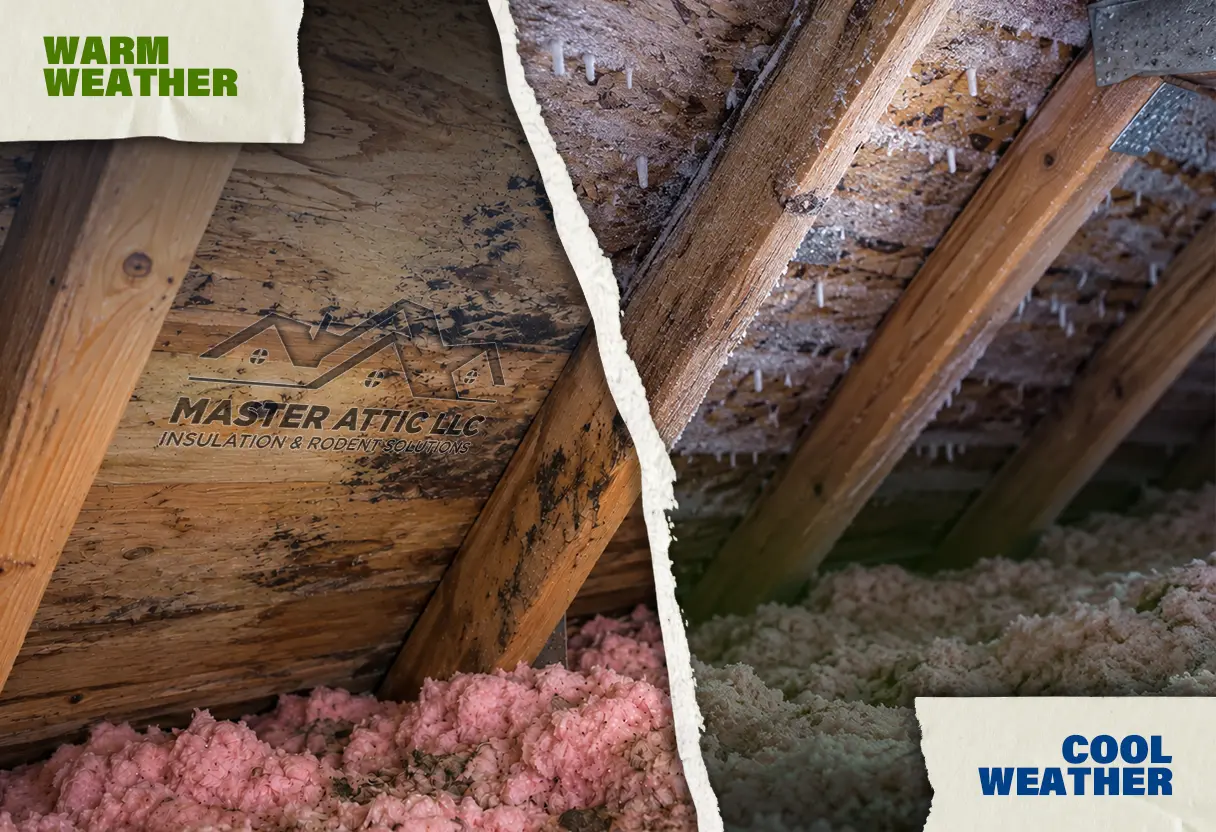
Compacted Attic Insulation: The continual freeze and thaw cycles of the outside winter temperatures bring
about attic condensation cycles that bring attic moisture build-up when there are attic ventilation problems. This attic condensation wets fiberglass or cellulose insulation and reduces its R-value, which can cause the HVAC
system to fail to keep the living space warm.Ice Dam Formation: When there is attic heat build-up due to inadequate attic ventilation, the attic heat will
escape to the upper roof deck, melt any snow on the roof, and the melted snow will run down the roof and freeze on the colder eaves - forming ‘ice dams’ that bring water to form under the shingles.
Frost And Rafter Rot: When the warm, humid air from daily living activities rises to attic space, the warm air forms as condensation, then will freeze into frost in a cold attic due to inadequate or damaged attic insulation. Frost forms on nail tips and attic wood framing, melts slightly during the day, and can cause wood rot or mold growth.
Determine Cause Of Attic Airflow Problems With An Attic Ventilation Inspection
One sign of an attic airflow problem isn't always an indicator of an attic ventilation problem. An attic that's too hot or too cold could result from inadequate or damaged attic insulation. Only an experienced and professional attic technician can determine whether trapped heat and moisture, or both, point to poor attic ventilation. As stated earlier in this article, a poorly ventilated attic and inadequate attic insulation fit hand-to-glove in providing the same attic signs of an attic airflow problem. The only means to determine the true reason for an attic airflow problem is by having a professional attic ventilation inspection, which includes:
Checking insulation level in the attic space and ensuring the insulation is evenly distributed with no low spots.
Determining the type of insulation in the attic and calculating the R-value of the insulation to confirm that it coincides with the recommended R-value for that attic insulation and that it is the best R-value for the climate location of your home.
Checking for a clear ventilation path with soffit intake vents and ridge and gable exhaust vents near the attic roof.
A check of the bath or kitchen fan ducted to the attic rather than through the roof or wall, or a disconnected duct found within the insulation. This is a common overlooked error. The bathroom exhaust fan should move humid air from hot showers outside the home, but often the bathroom or kitchen fan duct ends in the attic and heats the attic with humid moisture from kitchen cooking or hot bathroom showers.
The roof deck and wood frame of the attic are examined for water staining, dark patches, and rusted nail tips.
Wiring gaps or other unsealed air gaps are checked within the house that lead to air leaks upward.
Common Solutions To Resolve Attic Problems
While there are many signs of poor attic ventilation, such as excessive attic heat 50 to 100 degrees higher than the outside temperature, visible attic moisture build-up on rafters, beams, and walls in warm weather, frost on the underside of roof decking or attic rafters in cold weather months, and a persistent musty airflow - The good news is there are relatively easy and common solutions to resolve attic ventilation problems:
Clear debris and blown insulation from blocked soffit vents.
Add Baffle Vents. Baffle vents maintain proper attic airflow. The baffles fit between the roof rafters, providing a 1- to 2-inch air gap between the underside of the roof deck and the loose fill or batt insulation that 'naturally' blows toward the eaves and can block soffit intake vents. Baffle vents ensure attic airflow through the soffit vents and exit through the higher exhaust vents, such as ridge or gable vents.
Install Or Increase Ridge Or Gable Vents. Adding ridge or gable vents expands attic exhaust airflow, reducing attic heat and moisture build-up.
Seal Air Gaps. Electrical fixtures, pipes, and attic access points can let warm air leak from the living space into the attic. Air gap sealing helps reduce attic condensation, attic heat build-up, and high attic humidity, which can lead to attic mold growth and an attic musty smell.
Installation Of Radiant Barrier. A radiant barrier is a reflective material placed in the attic on the underside of the exterior roof deck, reflecting light in the direction it came from.
If the attic inspection finds little or no attic insulation, pest-damaged insulation, or improperly installed insulation with the wrong R-value for the home's geographic climate, the professional attic contractor will recommend installation of proper attic insulation.
Choosing Attic Ventilation and Insulation Based On Attic Size And Layout
Attic ventilation comes in two forms: static (passive) ventilation and mechanical ventilation.
Static ventilation uses the basic principle of hot air rising. Static ventilation provides a balanced ratio of intake vents, such as soffit vents, and exhaust vents, such as ridge vents at the roof peak.
Mechanical ventilation, as the name implies, uses external power sources to assist attic airflow. A major mechanical ventilation system requires installing a solar- or electric-powered attic fan.
The standard rule to avoid moisture build-up and high cooling costs with a balanced airflow in static ventilation is the 1:300 rule: 1 square foot of net free ventilation area (NFVA) for every 300 square feet of attic floor, if the attic has a vapor retarder that slows down water vapor from moving through the home's ceiling and into the cold attic. If the roof layout prevents installing low-intake soffit vents or there is no vapor barrier, use the 1:150 rule: 1 square foot of net free ventilation area per 150 square feet.
The type of insulation to use is based on the layout of the attic: choose open regular rectangular insulation comprised of fiberglass or rockwool batts/rolls rolled out manually between joists. If the attic roof has
a shallow pitch, tight corners, or numerous electrical or plumbing penetrations, blown-in cellulose or loose-fill fiberglass is the best solution, as it forms a seamless blanket that fills odd gaps far better than hand-cut batts.
If the attic is unvented and there is no natural airflow to carry away dampness, the chosen insulation needs to be a spray foam insulation that is sprayed into rafter bays, used in complex architectural shapes. If the air handler or ductwork is in the attic, it's best to convert to an unvented attic space to keep HVAC equipment operating in a controlled environment. This prevents ducts from sweating and reduces energy loss.
Contact
Contact the licensed, insured attic professionals at Master Attic, providing a full range of attic services to New Jersey and Pennsylvania residents for 25-plus years! Attic services include attic insulation removal, installing new attic insulation, including batt or blown-in attic insulation, and attic ventilation problems, such as air sealing, installation of baffle vents and radiant barriers, as well as attic air duct repair and replacement. Contact Master Attic with any attic insulation or attic ventilation problems - and stop the ‘sweating’ or ‘shivering’ - when the next utility bill appears in the mailbox!