What To Place In Attic For Rodent Removal?
In a recent article Why do animals like attics we explained why nature’s creatures take up residence in a home’s attic, hoping to live a ‘happily ever after’ in the rafters. A paradise of warmth from the outside cold, safety from predators, and a secure nest for raising their young. We also detailed why rodents, such as squirrels, rats, and mice, cannot be tenants of homeowners, as rodents can spread diseases and cause structural damage to the home.
Many homeowners, upon hearing the pitter-patter of those little feet, or worse, the sound of gnawing on wood, believe they can take the matter of rodent removal into their own hands. While the following preventative maintenance for keeping rodents away from the attic is always good:
- Trimming tree branches that hang over the roof.
- Installing chimney caps.
- Fixing tears in attic window screens.
- Ensuring vent covers are tightly secured.
- Installing gutter guards to keep small rodents from scampering up the downspouts.
Removing rodents from the attic as a DIY project is not recommended. Once mice, squirrels, or rats find their way into the attic space, the problem of rodent removal can be a complex and perplexing challenge for the average homeowner to remedy on their own, although the market is replete with rodent removal remedies.
Table of Contents
Reasons DIY Remedies Fail In Removing Rodents From Attic
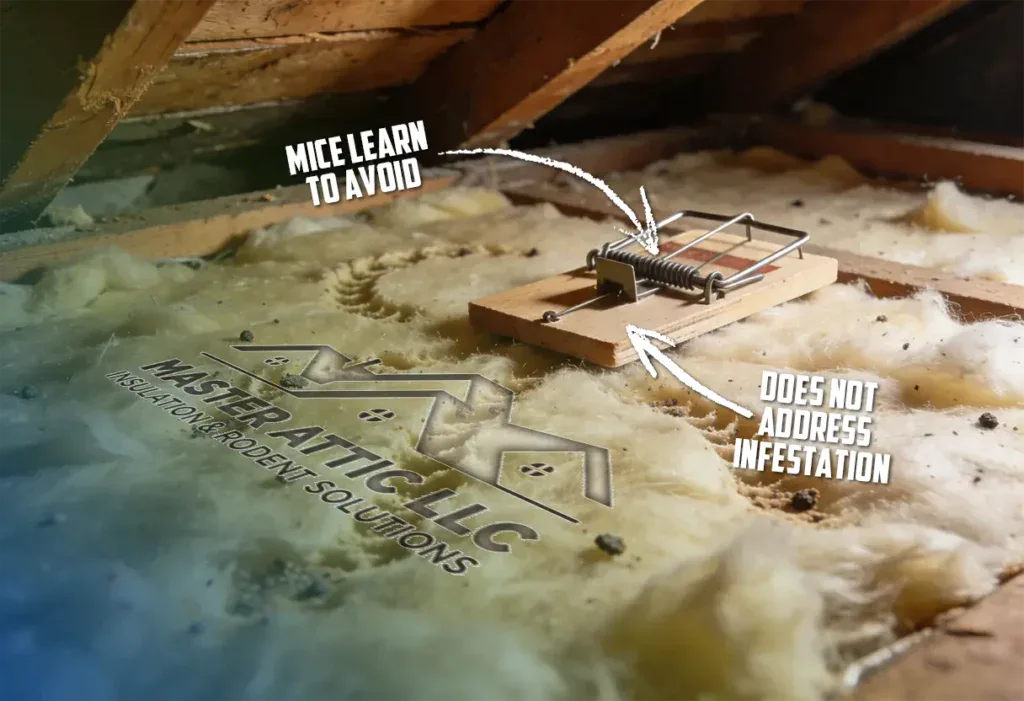
- Setting Mouse Traps: Placing mouse traps sporadically on the attic floor may catch one or two mice that happen to be scurrying across the floor. A trap, however, does not address the infestation of rodents, which breed within the attic insulation. Mice can breed very quickly, with young females producing new litters at an early age. Once a mouse encounters and survives a trap, it learns to avoid them.
- Poisonous Bait: While setting poisonous bait can kill a few mice or rats, poison left out on the floor can be dangerous if curious children or dogs come upon it. Poison, like a mouse trap, may eliminate a few mice or rats, but it won’t stop the rodents from continuing to enter the attic. The mouse that ingests poison can run and hide, and its dead carcass begins to emit an odor that releases dangerous pathogens into one’s home.
- Commercially Marketed Spray Repellants: While the product can write of ‘guaranteed’ effective rodent removal, the only ‘guarantee’ is a strong lingering odor to the household, possibly causing respiratory distress to young children, pets, or elderly persons.
- Natural Essential Oils As Repellants: Homeowners sometimes try the natural scents that repel mice, rats, or squirrels. Some of these natural ‘intense’ scents that repel rodents are: Peppermint Oil, Vinegar, Garlic, Cayenne Pepper, Black Pepper, and Cinnamon. All are very unpleasant to rodents initially, but if the attic space provides warm shelter and a food source, the rodents will become desensitized to the smell. High concentrations of these essential oils in poorly ventilated spaces, such as attics, can bring allergic reactions and respiratory problems to humans. Peppermint Oils can be toxic to household pets, particularly cats.
The Professional Process Of Rodent Removal In The Attic
While it is understandable for homeowners to be ‘sold’ on a quick solution to removing rodents from the attic, the root of the problem is not addressed. While the homeowner uses a ‘hit or miss’ approach to getting rodents out of their attic, The professionals of rodent remediation have established a comprehensive plan of not just removing rodents from the attic space, but ensuring they do not ‘mimic,’ in their own squeaky voice, their version of the words of World War II General Douglas McArthur: “I shall return!” The ‘commanders’ of rodent proofing the home attic have a process to remove rodents from the attic that begins with:
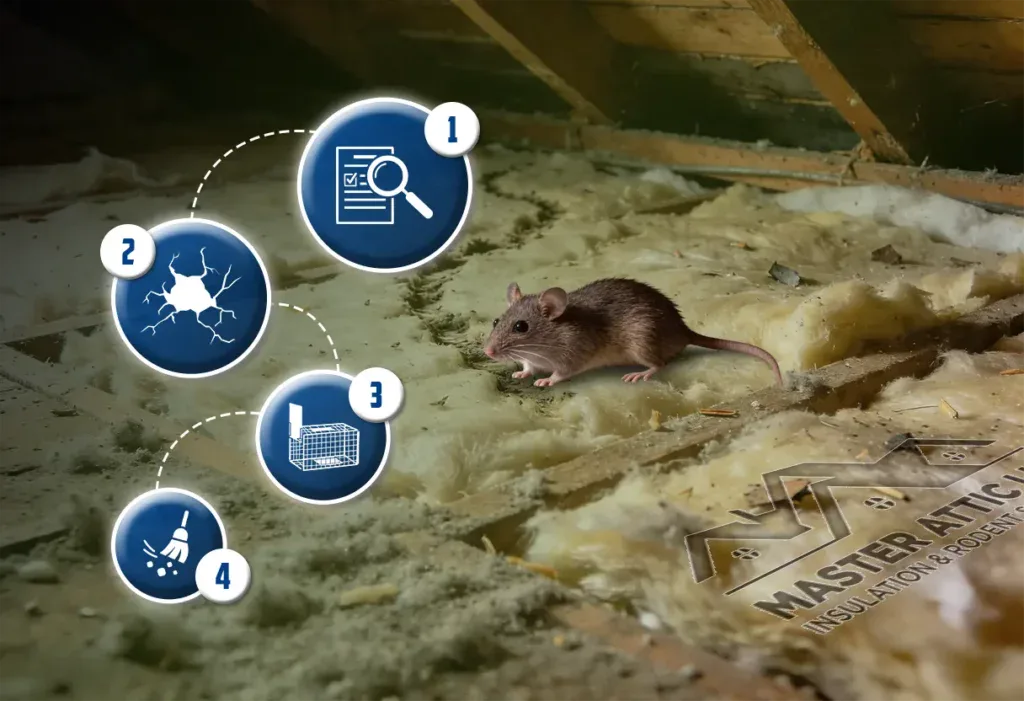
- Inspection of the attic: The professional process of removing rodents from the attic begins with a thorough inspection of the attic space, looking for evidence of rodent habitation and identifying the type of rodent present. One clue as to the type of rodent is in the rodent’s droppings.’ Mouse ‘droppings’ are small and tapered; rat ‘droppings’ are larger, approximately ½ inch. New ‘droppings’ are dark and soft, and those that have been there a while are light and brittle. The inspection process then begins the search for rodent nests, usually found in shredded insulation or chewed paper, fabric, or plant material, in corners or behind storage containers. The technician will look for grease or rub marks on beams, joists, and walls to determine the rodent’s travel path. A strong, musty, ammonia-like odor is a definite sign of rodent urine and a significant infestation. The sign of burrow paths or ‘tunnels’ 1 to 2 inches in attic insulation clearly tells the technician of the rodent being a rat or a mouse.
- Sealing All Entry Points: Once the professional technician confirms there’s a mouse (or rat) or squirrel in residence in the attic space, the next step is to search out access points around the exterior of the house as well as inside the attic. A bright blinking enter sign will not illuminate these entry gaps. The experienced technician looks for gaps as small as ¼ inch to ½ inch for mice or rats. Access points include where the connection of two roof pitches meet, rotted facia boards, broken soffit vents, torn screens, or gable louvers. Rodents can get into the attic through gaps around electrical lines, plumbing pipes, and HVAC ducts. With the entry points identified, the technician begins sealing the gaps with material the rodent cannot gnaw through, such as 100% copper mesh, which does not rust and provides a permanent solution for sealing around plumbing. A polyurethane sealant locks the mesh in place. Hardware cloth is a ¼-inch galvanized steel mesh used for large areas, such as vents and foundation gaps.
- Professional trapping and removal: The next step in the professional process of rodent remediation in the attic is trapping and removing the resident rodent. The experienced technician, who understands the rodent’s path by inspection, strategically places multiple rodent traps along it. Poison is not an option, as the rodent will scurry and hide in inaccessible areas, where it will die and leave a horrific odor. All other sources of food are removed that would compete with the set trap.
- Sanitizing and Clean-up: After rodent(s) are fully removed from the attic, the technician, wearing protective disposable clothing, rubber gloves, and a HEPA-filtered mask, begins the all-important attic sanitizing and clean-up.
All ‘droppings,’ nesting materials of the attic insulation, and other contaminated areas are disinfected. Contaminated material, such as feces, insulation, and other nesting material, is carefully removed from the attic in sealed plastic bags for safe disposal. This attic clean-up is followed by deodorizing the entire attic space to completely remove all lingering odors and feces trails, preventing the return of new rodents, should they chew or gnaw their way back in. However, gnawing is unlikely with entry points securely sealed. A deep-cleaning using an anti-viral, anti-bacterial, and anti-fungal cleaner is performed on all hard surfaces in the attic, such as rafters, floors, and storage containers, to eliminate odors and germs.
- Restoration and Prevention: The final step in restoring the attic space is repairing damaged wood beams and flooring, repairing air ducts, and installing new attic insulation. To prevent the rodent from returning to the attic, an annual inspection by a qualified attic contractor is recommended.
Contact The Pros Who Know
Removal of rodents in the attic space should never be a DIY project! Call Master Attic, we are the pros in giving the eviction notice to raccoons, squirrels, mice, and bats, who like taking up residence in attics in New Jersey and Pennsylvania. In addition to rodent removal, Master Attic technicians ensure the attic is fully restored with attic sanitizing, removal of contaminated insulation caused by rodents in the attic, and installation of new insulation. Master Attic also understands the importance of rodent-proofing the attic by identifying and sealing off entry points. Don’t wait, contact Master Attic, licensed attic and crawlspace professionals, serving New Jersey and Pennsylvania for 20 + years!