
Why is My House Losing Heat Through the Attic?
When winter hits New Jersey and Eastern Pennsylvania, your home should feel warm and comfortable so as to protect you from the bitter cold outside. But if your house starts to feel drafty or if your heating system is running nonstop and you start to see your energy bills spiking out of control, the culprit is hiding above you. Your attic plays a huge role in the comfort and heating levels of your home.
Heat loss through the attic is one of the most common and costly issues homeowners face. In fact, the Department of Energy estimates that up to 25% of a home’s heat escapes through under-insulated attics. What this does first is that it over works your heating system. In addition it creates uneven temperatures throughout your home, making winter feel much colder.
If you’re wondering Why is my house losing heat through the attic? This blog is here to explain the most common reasons and what you can do to fix them.
Table of Contents
1. Inadequate or Old Attic Insulation
Insulation is the backbone of your home’s thermal protection systems. Its job is to slow down the transfer of heat, whether it is in the summer from direct sun heat or in the winter from the outside cold. Unfortunately, many attics in NJ and PA have insulation that is old and compressed or it is below current recommendations or just plain missing.
When insulation thins out or loses effectiveness, warm air from your living spaces rises and easily escapes through the attic.
Signs that your insulation is ineffective include:
- Cold rooms directly below the attic
- Uneven temperatures from room to room
- Visible joists
- High heating costs
- Snow melting unevenly or quickly on your roof
The standard recommendations for insulation is R-38 to R-60 for attics in this region. Many older homes are below this standard. It’s very easy to understand. The lower your insulation level, the faster the heat will escape from your home. This leads to drafty hallways and extra pressure on your heating system, and higher monthly energy bills.
2. Air Leaks and Gaps in the Attic
Insulation alone isn’t enough to stop heat loss. Air leaks allow warm air to escape rapidly, no matter how much insulation you have.
Common sources of air leaks include:
- Gaps around plumbing lines
- Openings around chimneys
- Recessed lighting fixtures
- Attic hatches
- Gaps around ductwork
- Cracks in framing or drywall
We all know the basics of science that warm air moves upward, and even tiny gaps act like funnels to pull warm air into the attic and out of your home.
How To Spot Air Leaks
The good news is that spotting air leaks is easy! Look for drafts near outlets or near a light 0fixtures or an attic hatch door that feels cold to the touch.
Inconsistent heating throughout the home and also dust streaks on insulation are both signs of uneven air flow. Air sealing is one of the most affordable upgrades a homeowner should make.
3. Poor or Improper Ventilation
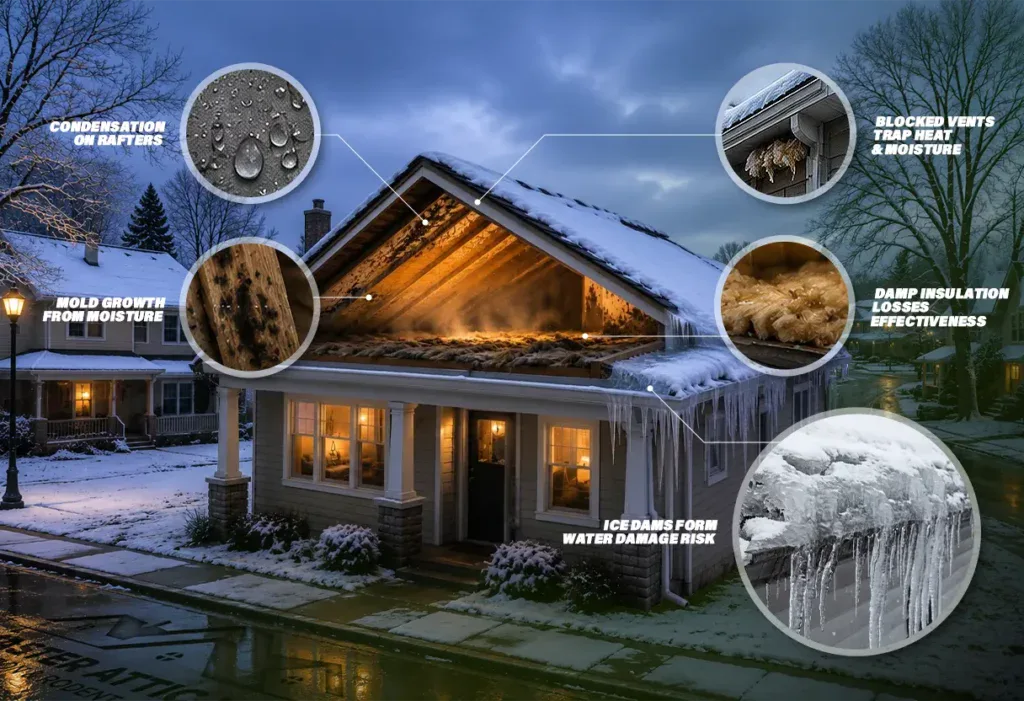
It may sound counterintuitive, but actually when your attic is ventilated it creates airflow that keeps the attic cold in winter and prevents heat buildup in summer. Without having a solid ventilation system your attic will trap heat in unexpected ways.
How Poor Ventilation Causes Heat Loss
- Warm air escaping into the attic stays warm,
- Melting snow refreezes at the edges,
- Ice dams force water under shingles
- Water damage ruins insulation and decreases efficiency
- The insulation becomes damp, losing its thermal resistance
This cycle results in significant heat loss and major winter problems. Without remediating the issue, the heat loss problem will only get worse and will cause more significant problems throughout your home.
Signs of ventilation problems include condensation on rafters, mold growth in the attic, ice dams forming along the roofline, and a musty smell that won’t go away.
4. Uninsulated Attic Floors and Attic Access Points
Many homeowners don’t realize that their attic access point, whether it’s a folding staircase, hatch, or door, is a major source of heat loss.
These areas often lack:
- Weatherstripping
- Proper sealing
- Sufficient insulation
Another point, attic flooring or walkways built by previous homeowners may block insulation from being placed evenly, leaving gaps in coverage. An uninsulated attic door acts like a giant hole in your home’s heating process. Warm air rises straight to the unprotected opening, making the upper floors feel colder and forcing your heating system to work overtime.
5. Ductwork Problems in the Attic
If your HVAC ductwork runs through the attic, heat loss becomes an even bigger concern. Poorly sealed connections or disconnected ducts, crushed or damaged ductwork, or just duct insulation that is totally missing are all common duct issues that can lead to heat loss.
Leaky ducts lose up to 30% of the heated air before it ever reaches your living spaces. And at the same time, uninsulated ducts release heat into the attic instead of your home.
Signs of a leaky duct include:
- Rooms that never get warm
- Higher utility bills without explanation
- Constantly running HVAC system
- Excessive dust or poor air distribution
Professional duct sealing and insulation can drastically improve comfort and efficiency.
Why is My House Losing Heat Through the Attic? The Solution
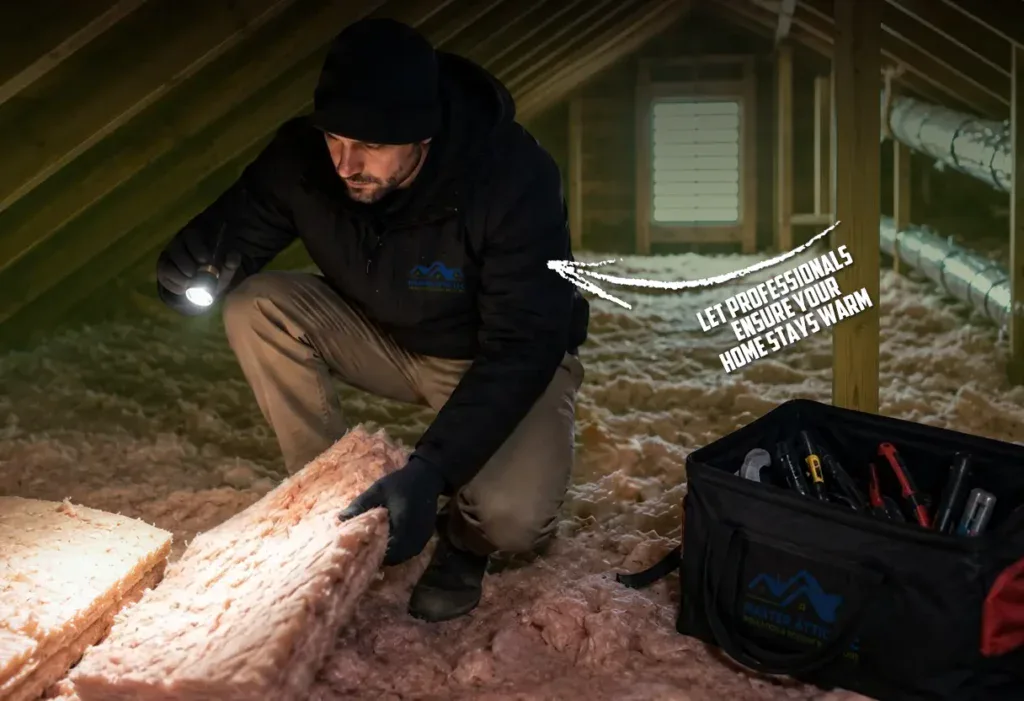
Heat loss isn’t just a comfort issue. It’s also an expensive one! When you let your attic’s heat escape, you pay more for heating fuel and electricity, furnace repairs due to constant use, and roof/attic repairs from moisture problems.
Fixing these issues is crucial to ensure your home stays warm, avoids ice dams, and runs as efficiently as possible. At Master Attic, we specialize in diagnosing and fixing heat loss in New Jersey and Eastern Pennsylvania homes. Our teams offer comprehensive attic inspections, professional air sealing, insulation removal and replacement, and ventilation solutions to ensure your attic is in great condition year-round.
If your house feels colder than it should or your heating system seems to be running all day, every day, and you are asking yourself, “Why is my house losing heat?”, your attic may be the main reason. Heat loss through the attic is a common problem, but it is also very fixable with the right approach. The first step is by addressing your attic’s insulation.
Don’t let your attic drain your wallet all winter. Contact Master Attic today for a professional attic inspection and customized insulation plan. Stay warm, lower your energy bills, and protect your home from costly winter damage.