
What Do Bats Do During the Winter?
Long before the winter season arrives, many local animals take to the skies or hunker down to avoid the snow and freezing temperatures. Maybe you wish that you could do that, too!
As you watch birds fly over your house, you might wonder, “What do bats do during the winter?” Do they hibernate or do they fly south like other animals? If you have dealt with a bat infestation before or worry that your attic space isn’t as secure as it should be, you are probably hoping for the latter of those scenarios!
In fact, both of these situations can be true. Read on to learn more about which bats hibernate and which ones fly to a warmer climate.
Table of Contents
Why Bats Need a Winter Survival Plan
Bats, like any wild animal, need food, shelter, and water throughout each season. Unfortunately, bats aren’t equipped to handle the winter weather without changing up their patterns and behaviors. Most bat species feed on insects, which can be in scarce supply during the harsh winter months.
The dropping temperatures and limited food supply force bats to adapt to survive. However, not all bats change their patterns the same way. Different bat species will vary in their behavior based on available resources and instincts.
Hibernation and Bats
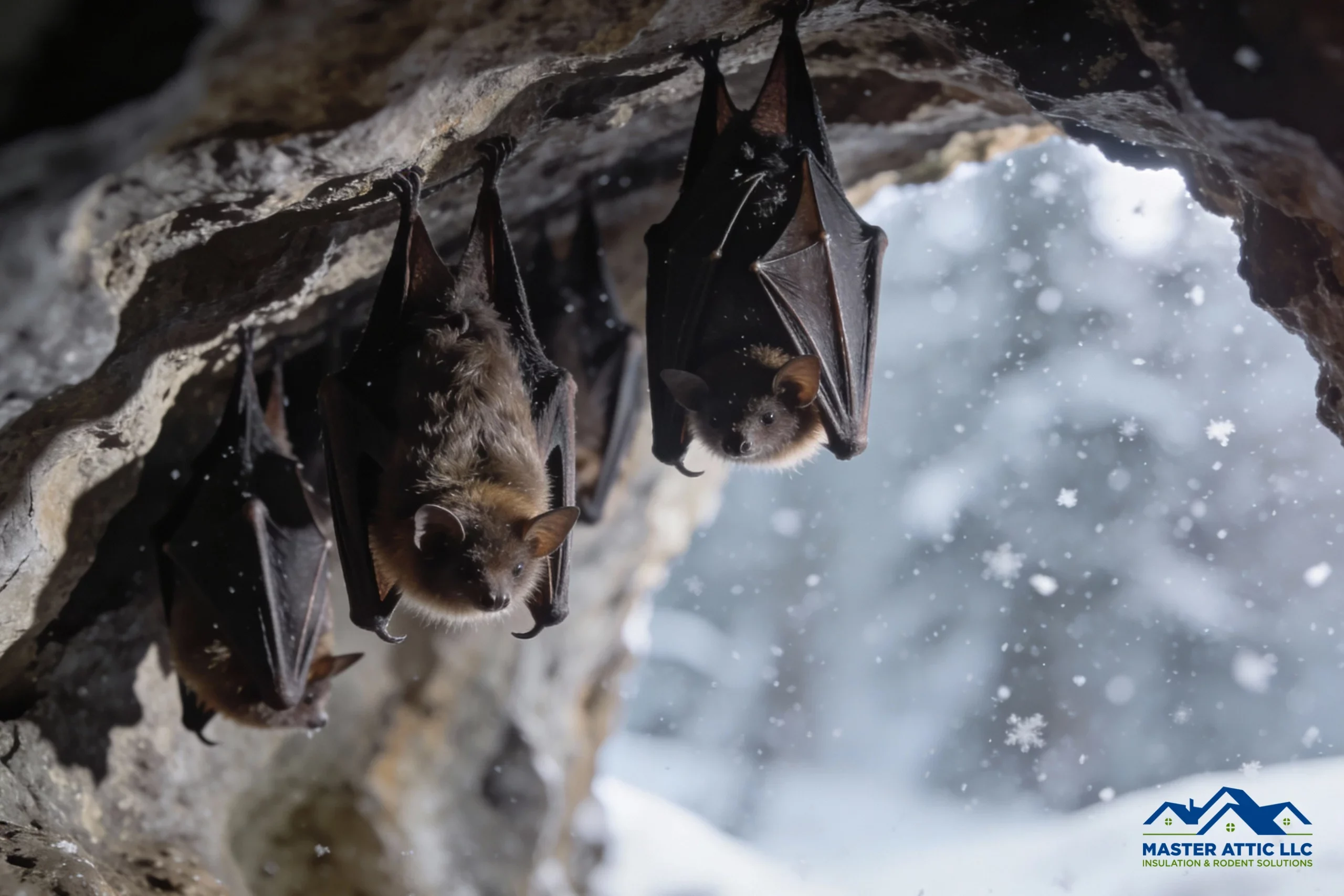
The first pattern shift is hibernation. Most people associate hibernation with bears, but many other animals do it, too! Hibernation is much more complicated than simply sleeping through the winter.
Hibernation is an extended state of dormancy. Any animal that hibernates slows down its body to conserve every bit of stored energy. This process helps reduce the amount of sustenance they need regularly.
Bats choose very specific places to hibernate, known as hibernacula.
These places need to be:
- Cool
- Dark
- Undisturbed
- Stable temperature
Can you think of a place that offers all of these? Caves, of course! Caves and old mines are some of the most common winter hideaways, but bats will also find hollow trees or rafters of abandoned barns to settle in for the season.
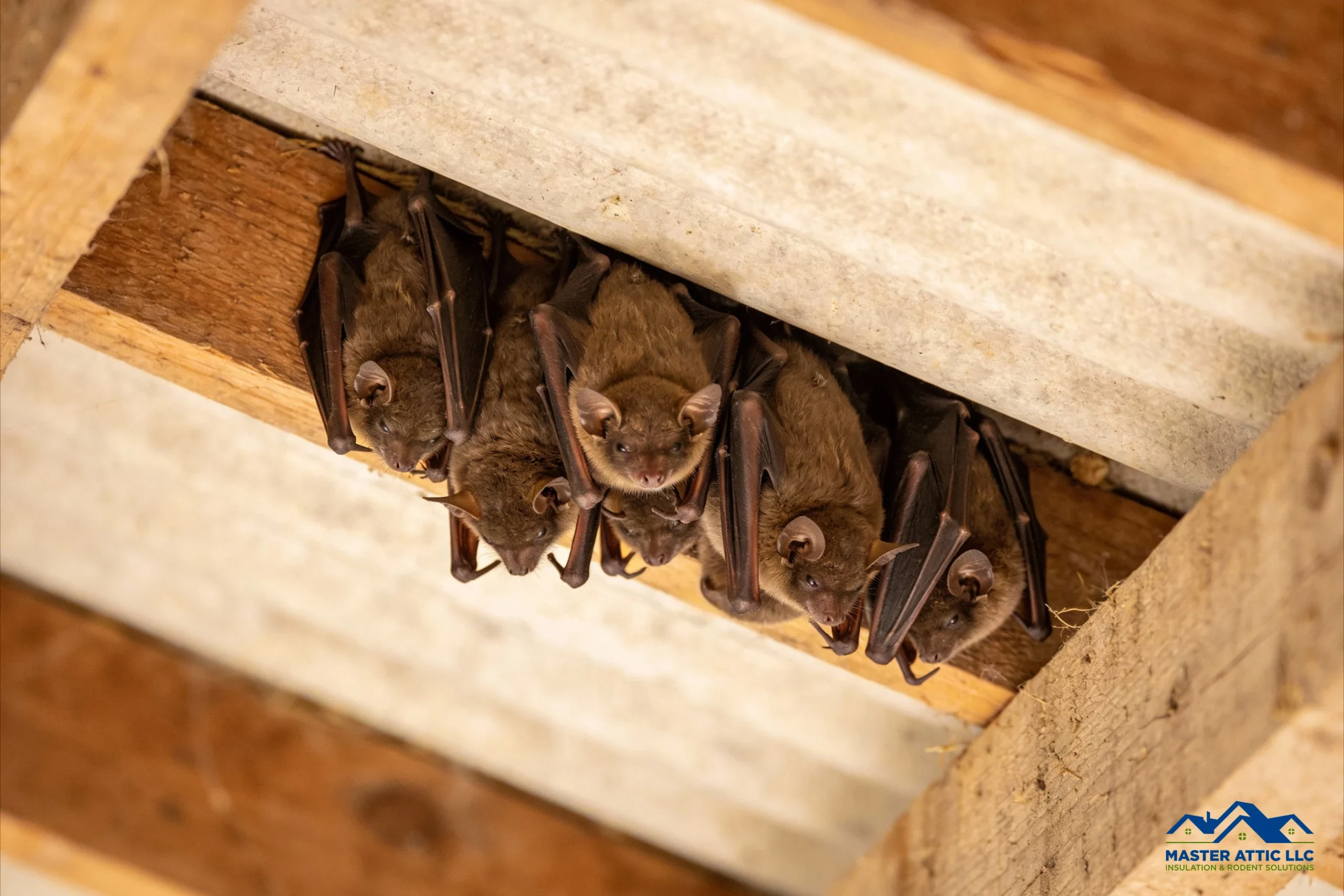
During a typical period of hibernation, their heart rate will drop from 300 beats per minute to less than 10. Breathing slows dramatically, and body temperature drops to the surrounding air temperature, which can sometimes be just above freezing. This process allows bats to live off their stored fat for months until the spring season arrives again.
Migration and Bats
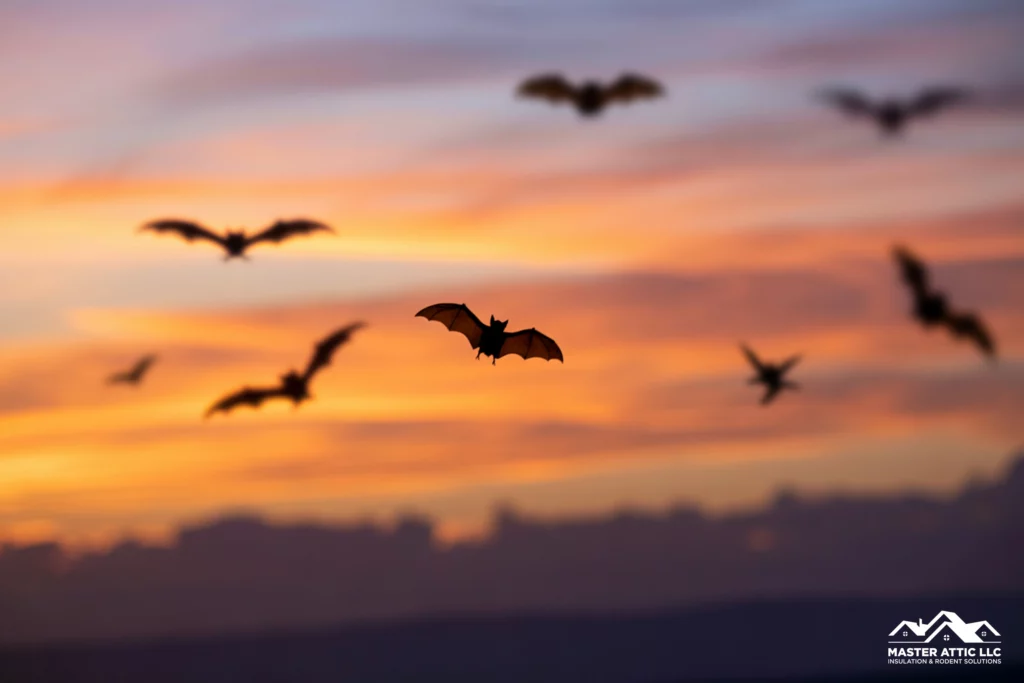
Migration is one of the more common solutions for animals that can fly. Some bat species will take to the skies to fly to warmer regions where insects remain active and populous. Unlike birds, which may travel thousands of miles, bats often migrate shorter distances. In addition, they often move to areas that are warm enough for insect activity instead of following rigid migratory routes.
Hoary bats and silver-haired bats are widely known to migrate during the winter season. They showcase a remarkable ability to adapt to changing conditions to ensure survival.
When Bats Take Shelter in Your Attic
If you have been searching for the answer to where bats go in the winter, there’s a good chance that you have bats around your property or are concerned about them infiltrating your attic space.
If bats are passing through on their migration journey, your attic may be a great stopping point if it offers warmth and easy access. Thankfully, these bats will simply rest in your space and will move on towards their final destination. If you have hibernating bats in your area, this problem becomes a bit more complicated.
Bats usually look for largely undisturbed places to hunker down for the season, which is why caves and forest spaces are so common. However, if they cannot secure a resting space promptly, they will have to make do with their surroundings. If your attic is close by and offers the protection they need, they will certainly look to it as a viable solution!
Once bats find their way inside your attic, they will settle down and make it their own. Unfortunately, bats aren’t considerate of your space and will cause potential issues for homeowners, like:
- Loud noises like scratching and chittering
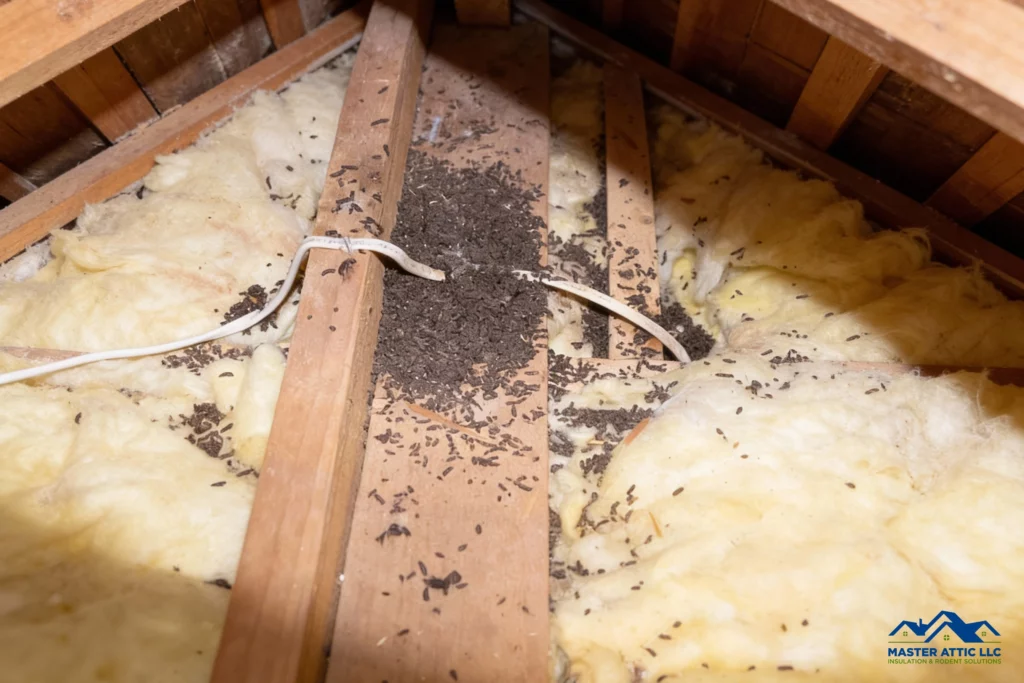
- Droppings and urine residue
- Dark stains on the walls
- Reduced air quality in the home
- Health concerns if contact is made with sick bats
If you suspect a bat colony in your attic, taking care of it right away is crucial for the health of your family and the safety of your home.
Removing Bats in Attics
Removing a bat colony can be tricky or even dangerous to do on your own. Some bats carry rabies, and coming into contact with an infected bat can be deadly. This is why having a bat removal company address your infestation is necessary!
Professional and humane removal is the best solution for removing a bat problem. A trained pest removal team has the tools, training, and safety gear to stay protected. They are also equipped with the knowledge needed to remove them for good without causing injury or death.
Bats are a vital part of our community’s ecosystem, so they should be protected with humane removal methods. Once they are gone, your team will address the entry point and seal it up to prevent another bat family from making your attic its hibernacula.
How To Prevent Bats in Your Attic
Thankfully, you can take steps right now to keep hibernating and migrating bats out of your attic space. Start by sealing any potential entry points and doing a thorough evaluation of your attic and roof. Even a small gap or a single missing shingle can offer enough space for small bats to sneak through.
If you live in a wooded area, consider installing a bat house or two around your property as an alternative solution. In addition, keep your trees trimmed around your roof and store wood piles at least 20 feet away from your home.
Finally, check your attic space often for signs of an infestation. Any concerning sign should be evaluated right away to stop the problem before it gets worse.
So, now that you have the answer to the question, “What do bats do during the winter?” You can rest easy knowing that the team at Master Attic is here to handle your bat removal this winter.
Bats in your attic? The team at Master Attic has you covered. Contact us today at (800) 285-4009 to schedule a humane removal.