
10 Winter Energy Bill Hacks for Pennsylvania Homes
Winter in Pennsylvania can be long, cold and expensive. Between freezing temperatures, snowstorms and constant heater use, many homeowners see their energy bills spike dramatically between December and March. While it may seem inevitable, high winter energy bills are often the result of heat loss, inefficiencies and small issues that add up over time.
The good news is that you don’t need to freeze or overhaul your entire home just to save money. With a few strategic upgrades and smart habits, you can significantly lower your winter energy bills while keeping your home warm and comfortable.
Here are 10 winter energy bill hacks for Pennsylvania homes that actually work.
Table of Contents
1. Seal Up Attic Air Leaks Before Turning Up the Heat
One of the biggest energy drains in Pennsylvania homes is unsealed attic air leaks. Warm air naturally rises, and if there are gaps around attic hatches, recessed lights or plumbing lines, heat escapes straight into the attic.
When warm air leaks out, your heating system has to work overtime to replace it. Air sealing the attic floor helps trap heat where it belongs and immediately improves comfort throughout the home. This is often one of the most cost-effective energy improvements a homeowner can make.
To see why this matters so much in winter, read why attic air gap sealing is essential for winter.
2. Upgrade or Add Attic Insulation
Many Pennsylvania homes simply don’t have enough attic insulation to handle harsh winters. Inadequate insulation allows heat to escape through the roof, leading to cold rooms, icy ceilings and rising energy costs.
For most PA homes, the recommended attic insulation level is R-49 to R-60. If your insulation is thin, uneven, or compressed, adding more can drastically reduce heat loss. Proper insulation also helps prevent ice dams, which is another common winter problem.
3. Set Your Thermostat Strategically
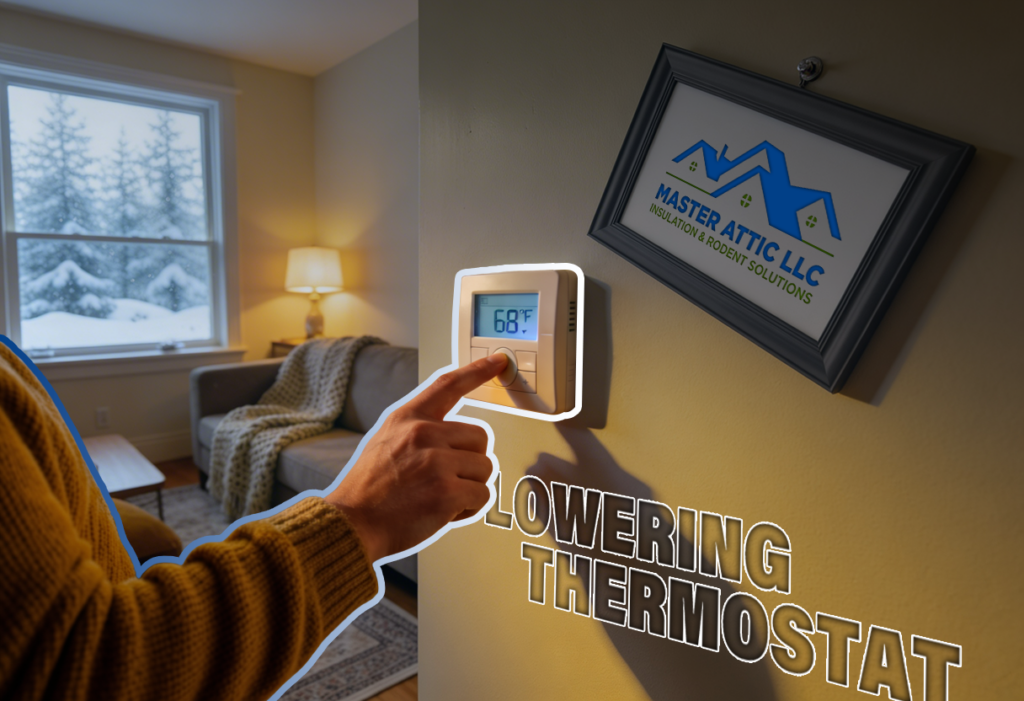
Lowering your thermostat just a few degrees can make a noticeable difference on your energy bill. The Department of Energy recommends setting your thermostat around 68°F while you’re home and lowering it when you’re asleep or away.
If you haven’t already, consider installing a programmable or smart thermostat. These high-tech devices automatically adjust temperatures based on your schedule, which presents unnecessary heating when your family is away or asleep.
4. Stop Heat Loss Through Attic Access Points
Attic doors and pull-down stairs are often overlooked in a home, yet they are some of the leakiest spots! Many are uninsulated or poorly sealed, allowing warm air to escape directly into the attic.
Installing an insulated attic cover or air-sealed hatch can significantly reduce heat loss. This small upgrade helps stabilize indoor temperatures and prevents cold drafts from spreading through upper floors.
5. Check Bathroom and Kitchen Vent Fans
Bathroom and kitchen exhaust fans are designed to push air outside, but if they aren’t sealed properly, they can allow cold air to flow back in during the winter.
Ensure vent dampers are working correctly and that fans are sealed where they penetrate the ceiling. A malfunctioning vent fan can quietly leak warm air all winter, which drives up heat costs without any added benefit.
6. Use Ceiling Fans the Right Way
Ceiling fans aren’t just for summer! In the winter, setting ceiling fans to rotate clockwise at a low speed can help push warm air down from the ceiling and circulate it throughout the room.
This simple trick can make rooms feel warmer without raising the thermostat. This allows you to use less energy while maintaining comfort.
7. Address Cold Spots and Drafty Rooms
If certain rooms are always colder than others, there’s likely an insulation or air sealing issue behind the scenes. Common causes include poorly insulated attic sections, knee walls, or exterior wall issues.
Instead of cranking up the heat for the whole house to fix a cold room, identifying and fixing the root cause can eliminate those cold spots and reduce overall energy use.
For more guidance on where to prioritize improvements, see what part of a house you should insulate first.
8. Replace or Clean Furnace Filters
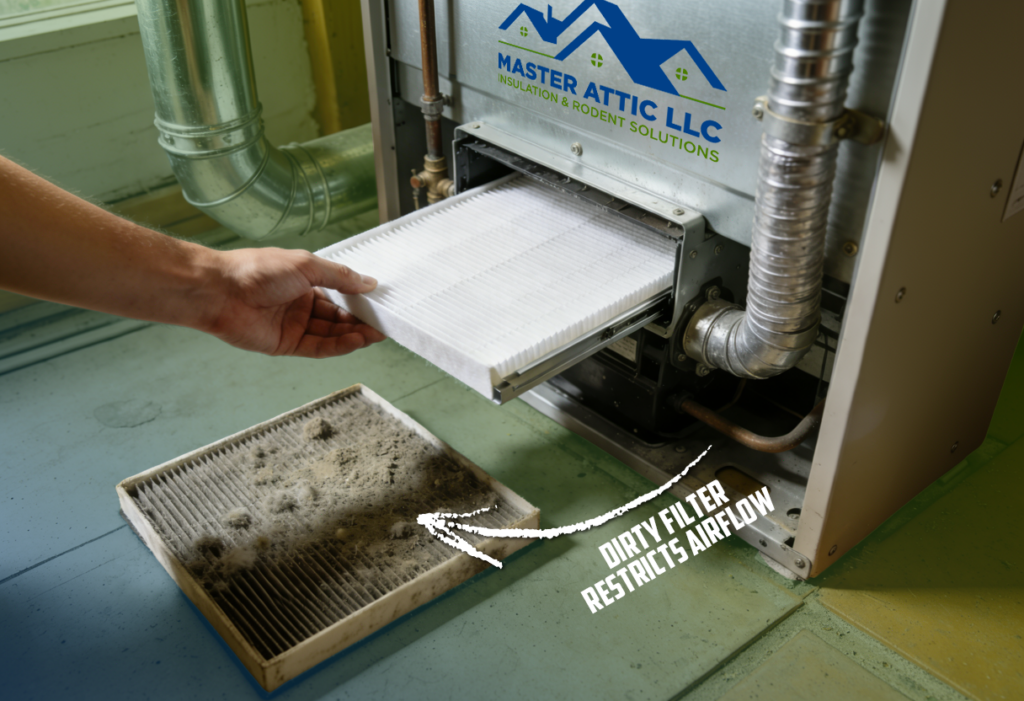
A dirty furnace filter restricts airflow, forcing your heating system to work harder and use more energy. During winter, filters should typically be checked once a month and replaced seasonally.
Clean filters improve system efficiency, help maintain consistent temperatures, and can even extend the life of your heating equipment.
9. Let the Sun Help
The sun is a powerful tool, so use it to your advantage! On sunny winter days, open curtains and blinds on south-facing windows to let natural sunlight warm your home. Even in cold temperatures, solar heat can raise indoor temperatures and reduce heating demand.
Once the sun goes down, close curtains to help insulate windows and prevent heat from escaping overnight.
10. Schedule an Attic Energy Evaluation
If you aren’t sure where your home is losing energy, a professional attic evaluation can help narrow down the issue. An inspection will reveal hidden issues like air leaks, insufficient insulation, moisture problems, or ventilation concerns. All of these issues would affect your winter energy bills.
Addressing these issues together often delivers better results rather than chasing down each individual problem as they come up.
Why the Attic Matters Most in PA Winters
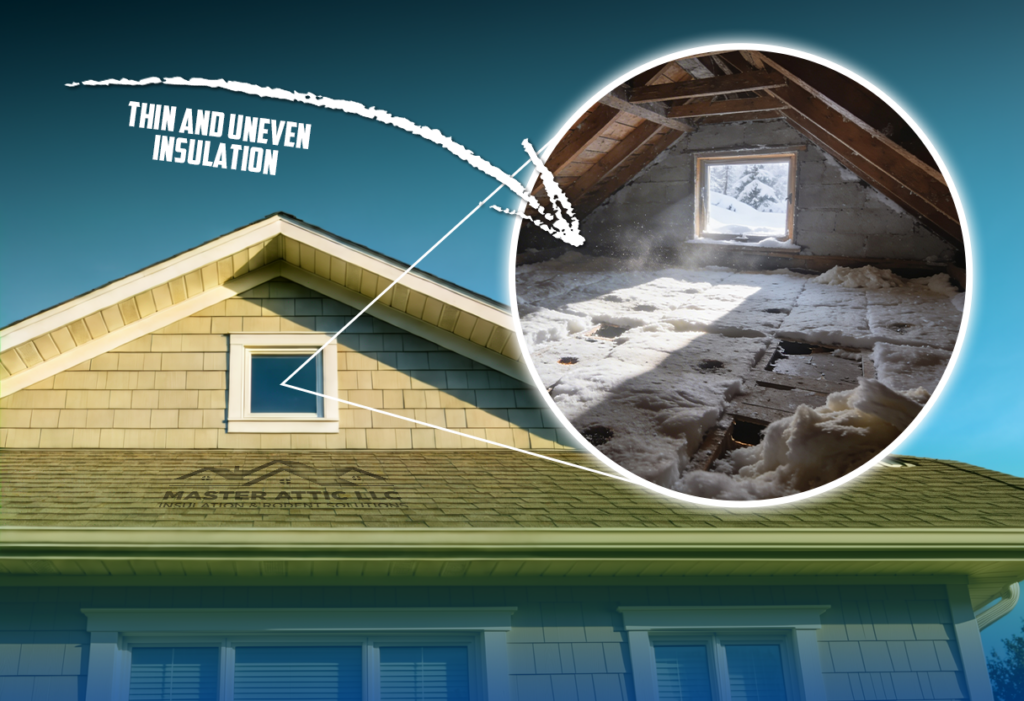
In Pennsylvania homes, the attic is often the largest source of heat loss. Snowy roofs, freezing temperatures, and fluctuating winter weather put constant pressure on your home’s thermal envelope. Without proper insulation and air sealing, heat escapes upward, forcing your heating system to compensate nonstop.
Focusing on attic efficiency improves comfort, reduces drafts, and helps protect your home from winter damage like ice dams and condensation issues. Additionally, it can save you some serious cash! Lower winter energy bills don’t require extreme sacrifices or constant thermostat battles.
By addressing air leaks, improving insulation, and making smart heating adjustments, Pennsylvania homeowners can stay warm without overpaying all season long.
Use these winter energy bills hacks for Pennsylvania homes, and call Master Attic if you need help upgrading your attic insulation or sealing air leaks.
If your energy bills spike every winter or certain rooms never seem warm, Master Attic can help. Our team specializes in attic insulation, air sealing, and energy-saving solutions designed specifically for Pennsylvania homes.