
How Do You Get Flying Squirrels Out of Your Attic?
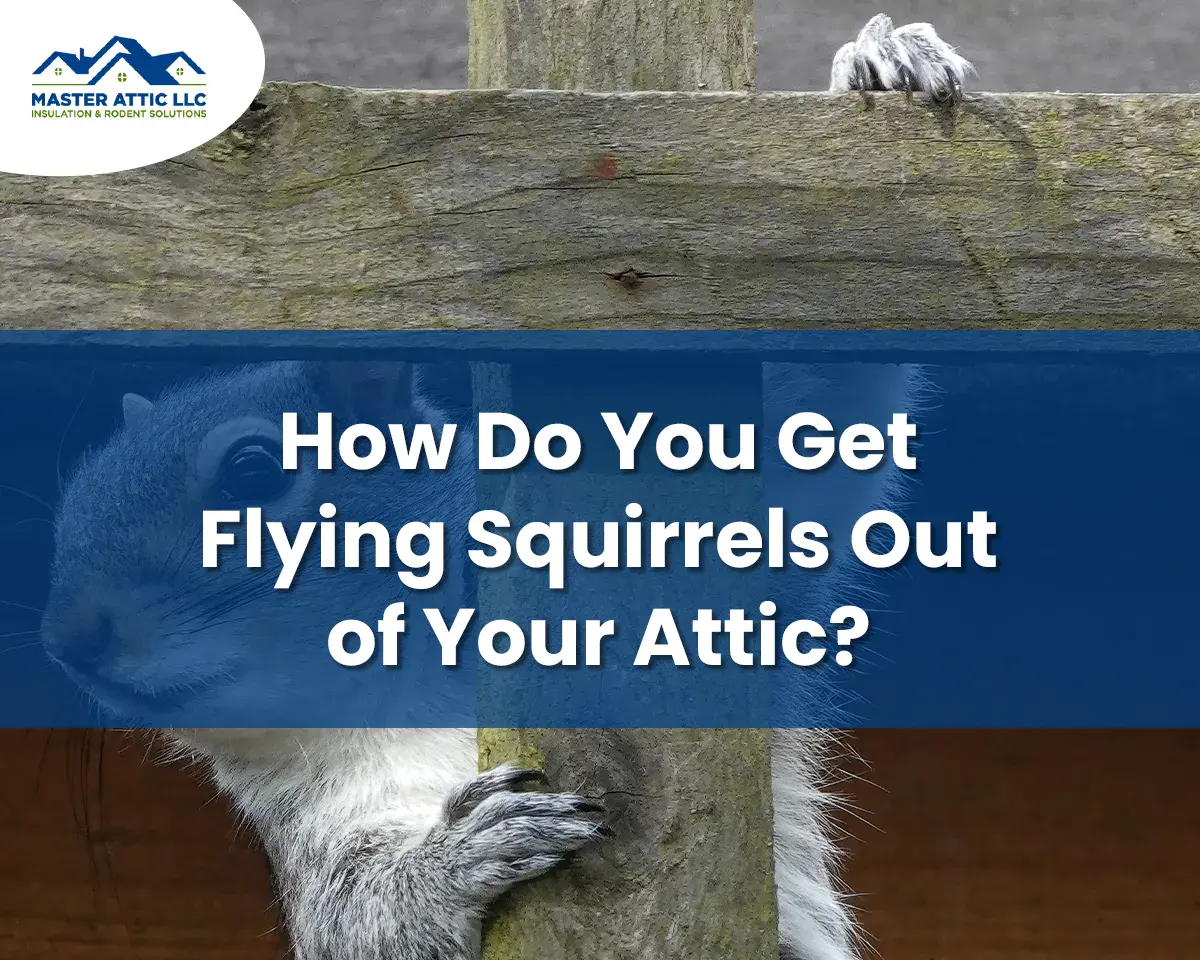
Your home does a great job providing shelter and comfort for your family day in and day out. It stays warm when the temperature drops, keeps you dry when it’s pouring outside, and provides a safe haven for your family to relax and unwind after busy days.
Unfortunately, all of the reasons why you love your home is also what make it enticing to neighborhood pests and unwanted intruders. Animals like mice, raccoons and flying squirrels also see your home as a safe haven from the elements and dangerous predators.
Dealing with a pest infestation is never fun, but especially when you are dealing with an animal that tends to make a mess and a racket, like flying squirrels.
If you are wondering, “How do you get flying squirrels out of your attic?”, this definitive guide below will help you understand what to do to protect your family and home.
How Do Flying Squirrels Get In My Attic?
Flying squirrels, while they may look cute and cuddly outside, are classified as a destructive pest species. They prefer buildings and sturdy structures to nest and raise their young, which makes your attic space the perfect location! They are also nocturnal, so it’s important for them to find a space that will protect them during the daylight hours while they sleep.
Flying squirrels are crafty, so it doesn’t take much for them to find an entry point into your attic. Most commonly, flying squirrels can get into your attic through small cracks, gaps, or holes in your roofline or siding.
Flying squirrels can also get into your home in other ways:
- Eaves
- Vents
- Chimneys
- Pipe and wiring holes
- Gaps in soffits
Once they get inside, they will quickly make a home of your attic space. You might be thinking that one or two squirrels that come and go aren’t a big issue, but unfortunately, flying squirrels are social animals. They tend to live in colonies of 20 squirrels or more, and their colony will continue to grow as babies are born.
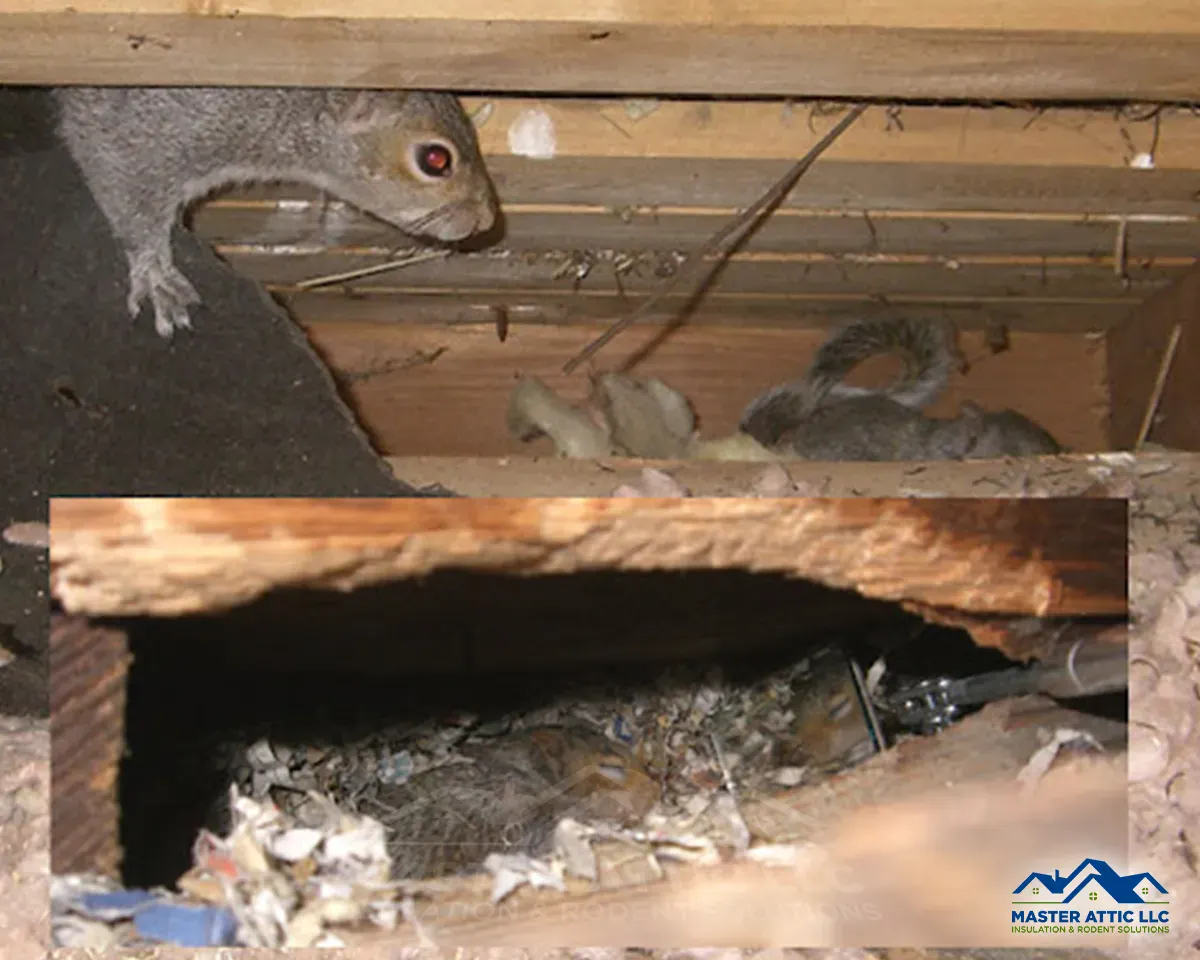
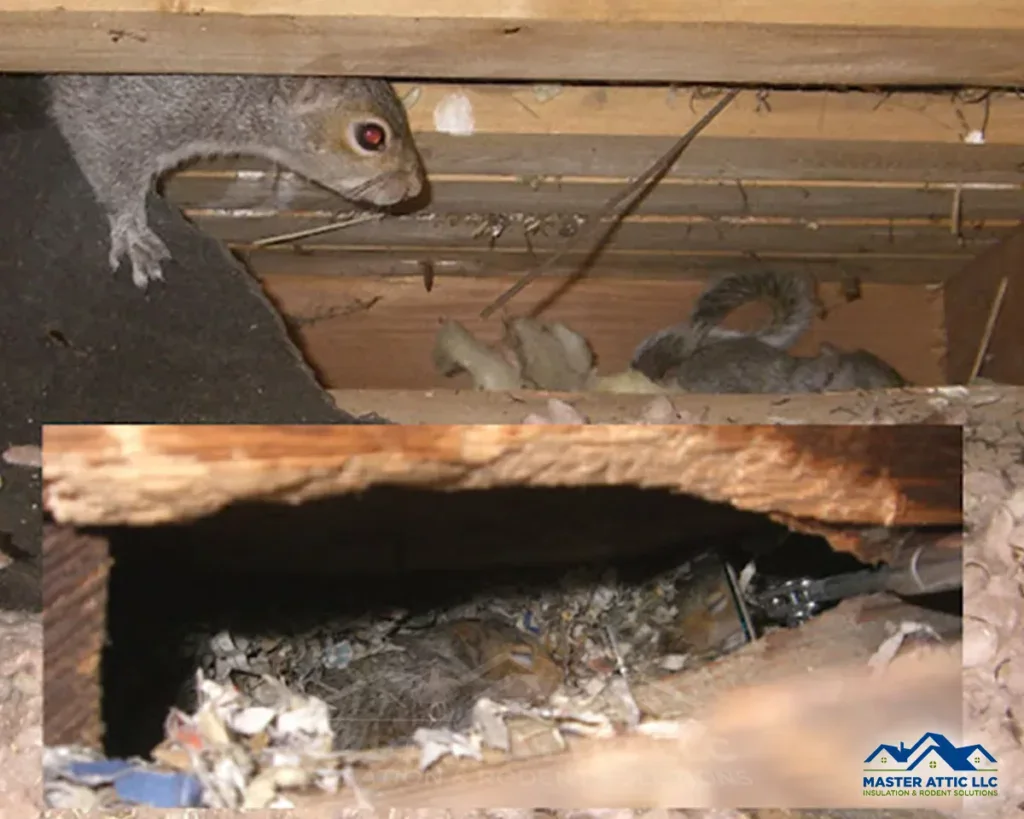
One flying squirrel might not do too much damage, but 20 squirrels can make quite an impact! This is why it is important to know the signs of a pest infestation so you can take action right away.
What Are the Signs of a Flying Squirrel Infestation?
The good news is that flying squirrels have a hard time going under the radar in your home. They are loud, messy, and quite inconsiderate of your home and surrounding property. As the colony grows, their impact becomes larger and more destructive.
If you notice any of these signs, you might be dealing with a flying squirrel infestation:
- Scurrying sounds in the attic or walls
- Strange or stinky smells coming from the attic
- Chewed wood on floor or support beams
- Chewed wires or electrical problems in the home
Even just noticing one of these issues should prompt you to investigate as quickly as possible. The longer you wait, the worse your damage and your situation can become.
What Does a Flying Squirrel Nest Look Like?
When you head into your attic to investigate, it’s important that you wear gloves, a mask and long sleeves and pants. While flying squirrels are prey animals, they can still be aggressive or dangerous when threatened. Simply take a look around your attic space to check for the squirrels themselves and nests as well.
Flying squirrel nests are made up of whatever the squirrels can find. Sticks, leaves, twigs, and even household materials like insulation can make a cozy bed, and they often have a small circular entrance on the outside of the nest for the colony to come and go. If you spot a nest, leave it undisturbed and call a professional pest removal company instead.
How Are Flying Squirrels Removed from an Attic?
The first thing to remember when it comes to pest removal is that even though animals like flying squirrels and mice are prey animals, they can still be dangerous. They can cause injury and can also make you sick if you come into contact with them. Leave the removal to the professionals who are trained to handle all kinds of pest infestations.
Once you call a pest removal team, they will arrive and assess your situation before moving forward. The pests will be located in the attic, and some of the team will evaluate the exterior of your home to locate the entry point. In most cases, the entry point will show signs that a pest has been moving in and out of your home.
Your pest removal team will look for:
- Visible holes or chew spots
- Missing or broken vent covers
- Grease marks around siding or broken shingles
- Sagging soffits and rooflines
After their entry point is identified, the squirrels will be removed humanely while the entry point is sealed back up. One-way doors and live traps will be used to ensure the animal’s safety while they are removed from the home. Once outside, they are released back into the wild where they belong.
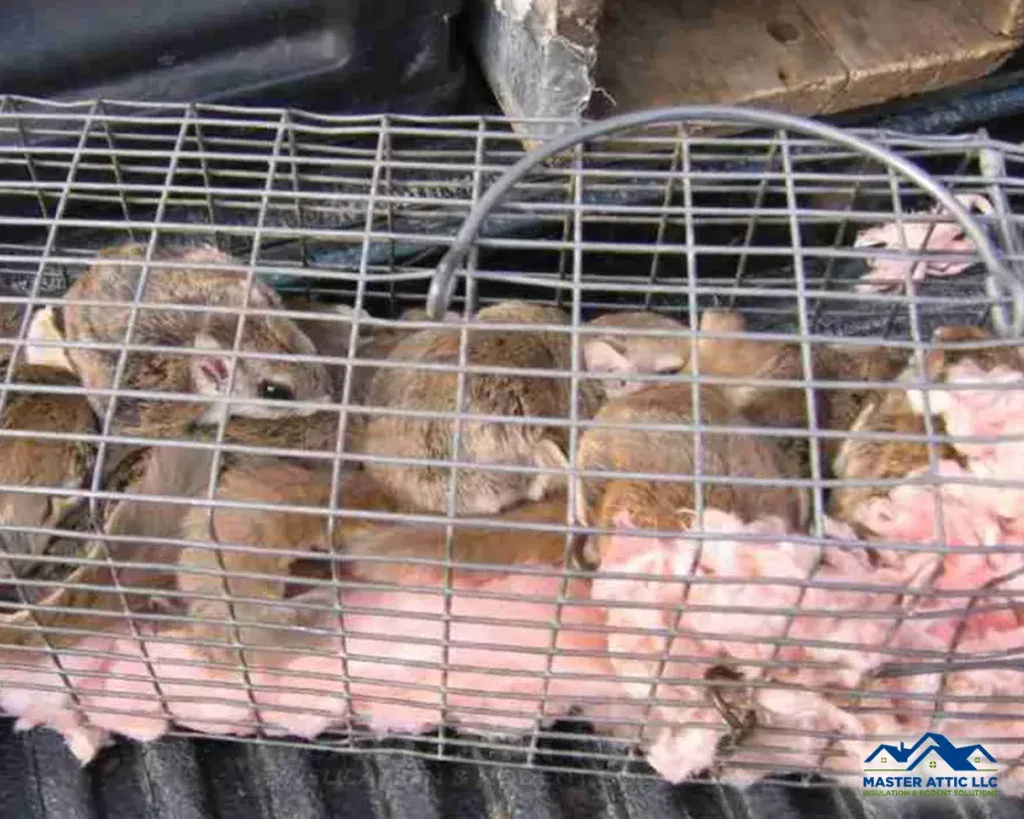
In addition to the repairs made around the entry point, any damage caused by the flying squirrel infestation is handled at this time. Damaged insulation is replaced, droppings and urine are cleaned, and your entire space is sanitized. Even structural damage like chewed wood and electrical work can be repaired. Your entire attic space will also be sanitized to remove odor and prevent the spread of disease.
Tips for Preventing Another Flying Squirrel Infestation
After the squirrels are gone, you certainly don’t want to be dealing with another infestation anytime soon! Your original entry point should be sealed up tight, but it is still important to do routine checks of your roof and attic to stop a problem at its source. Look for holes, missing shingles, and broken vent covers, and also check your attic space regularly to look for anything amiss.
Any sort of hair, droppings or urine residue found in your attic should be investigated as quickly as possible to stop an infestation before it gets worse.
Do you have flying squirrels in your attic? The team at Master Attic can get them out. Call us today at (800) 285-4009 to schedule your flying squirrel removal!