
How Do You Fix an Air Leak in the Attic?
If you are a homeowner, you probably know a lot about your house. You can differentiate the different sounds it makes, you know all its quirks, and you rely on it every day to keep you comfortable and safe, regardless of the season.
Over the years, your home will unfortunately age and undergo general wear and tear. After all, while homes are built to last, they aren’t invincible! One of the most common problems that homeowners face is unexpected air leaks. As your home settles and your property ages, air leaks can become a large and impactful problem for your entire family.
If you are walking through your home and feel a draft or you suddenly notice a temperature shift, you might wonder if you have an air leak somewhere. But how do you fix an air leak in the attic, and how can you track down where it is coming from?
Let’s explore more about attic air leaks and what to do about them below.
What Are Attic Air Leaks?
Your home is designed to keep you safe and comfortable as the seasons change, but it’s also designed to breathe. Houses have a carefully designed air control system to help move air throughout each level. Your insulation, HVAC system, and even your floor plan all work together to move conditioned air through your living spaces until it eventually rises out of your attic.
This airflow must happen in a controlled way to prevent energy loss and moisture buildup. Small gaps and cracks disrupt this balance and let unconditioned air in or out.
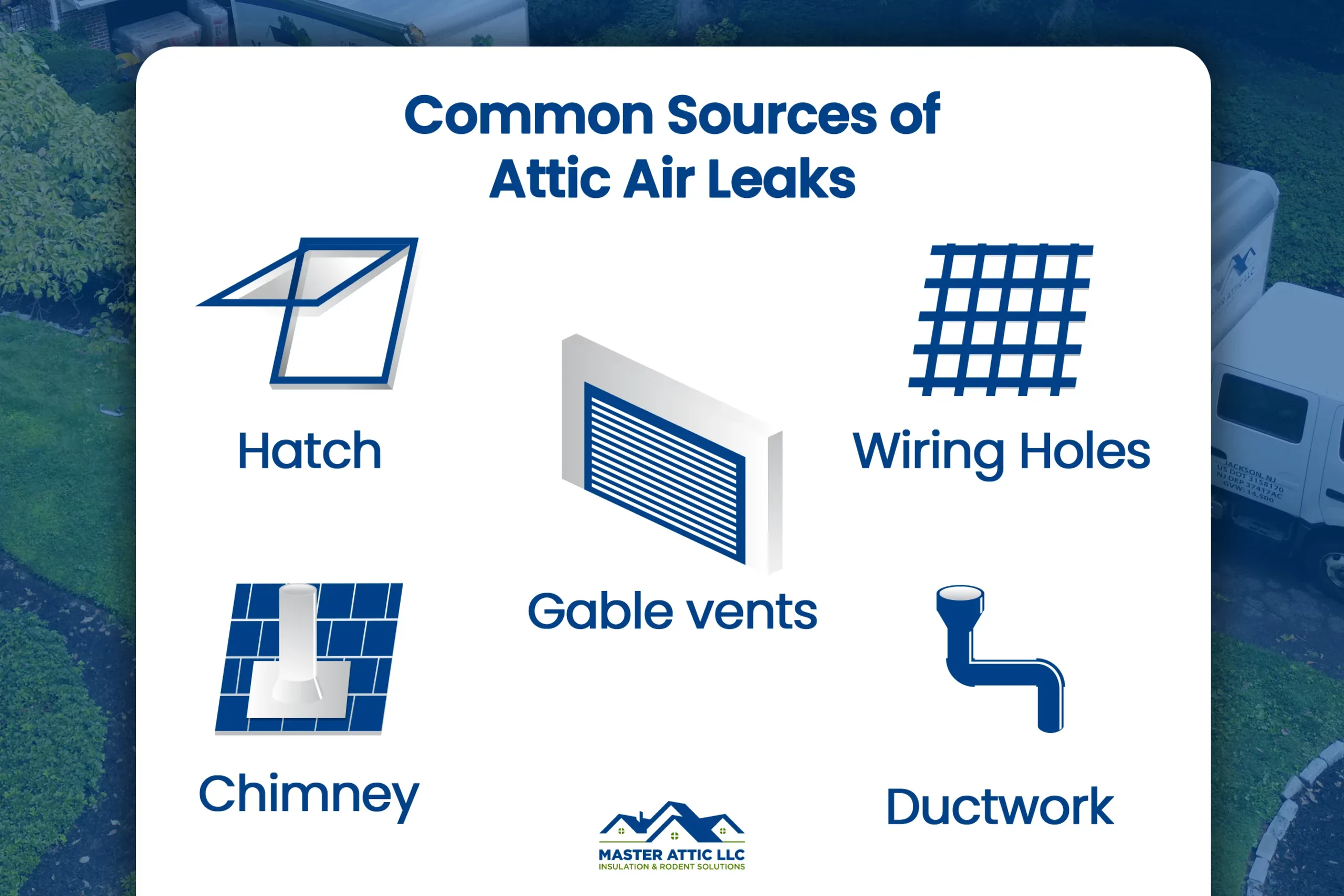
Common Sources of Attic Air Leaks:
- Attic hatches
- Vents, fans, and ductwork
- Wiring holes and outlets
- Chimneys and flues
- Damaged siding or pest intrusion points
Unsealed areas like these allow unwanted air to bypass insulation and disrupt your home’s comfort and energy efficiency.
Why Are Air Leaks in the Attic Bad?
Attic air leaks let unconditioned air enter your home and let conditioned air escape, causing several issues:
Inefficient HVAC Performance
Your HVAC system works harder to compensate for temperature fluctuations caused by air leaks. This leads to:
- Inconsistent temperatures in certain rooms
- Higher energy bills
- Increased wear on HVAC components
Moisture & Mold Risk
Outside air brings humidity with it. Over time, this can raise moisture levels in your attic, leading to condensation, mold growth, and even wood rot.
How to Detect Attic Air Leaks
Start with a visual inspection of your attic:
- Look around vents, pipes, chimneys, and corners for visible gaps
- Check for stains, dust trails, or damaged insulation
DIY Air Leak Detection Tips:
- Hand test: Run your hand along edges to feel for air movement
- Candle test: Light a candle and watch for flickering near suspected leaks (never leave unattended)
For more accurate results, professional air leak detection services use:
- Infrared thermal cameras
- Blower door tests
- Airflow meters
How to Fix an Air Leak in the Attic
Once the leaks are located, your repair strategy will depend on the size and location of the gaps.
Common Fixes:
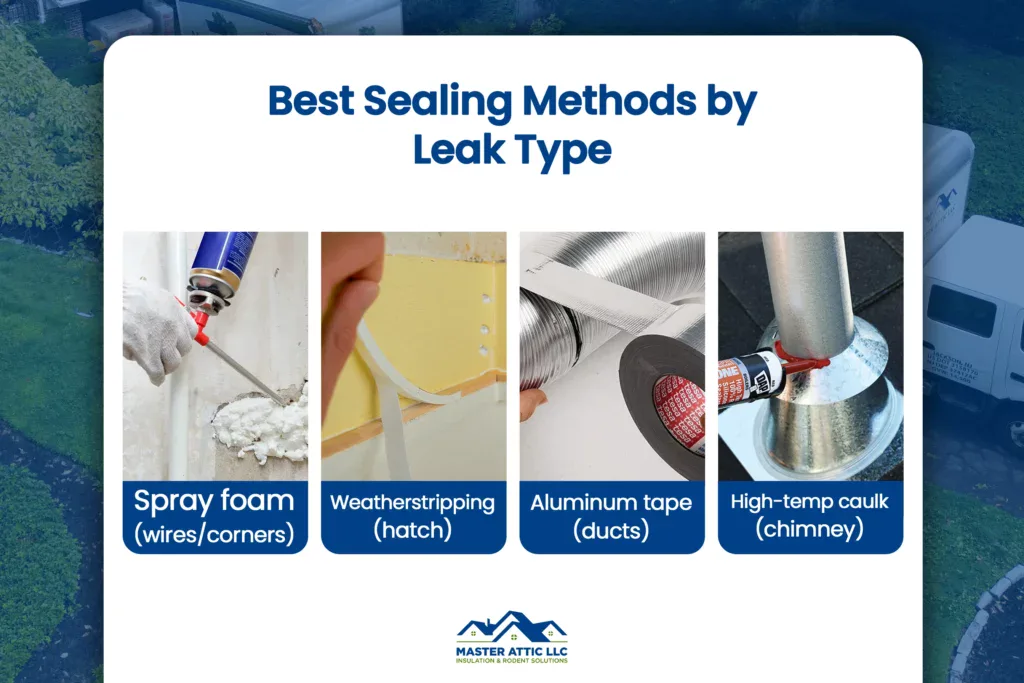
- Expanding spray foam: Great for sealing gaps around pipes, wiring, and corners
- Weatherstripping: Used on attic access doors or hatches
- Caulk: Ideal for sealing small, stationary cracks
Leak Location | Best Solution |
Around the attic hatch | Weatherstripping + insulation |
Wire holes, outlets | Fire-rated spray foam or caulk |
Duct connections | Aluminum tape or mastic |
Chimney surrounds | High-temp caulk + metal flashing |
In many cases, adding or upgrading insulation is recommended to improve energy retention and seal any hidden air channels.
When to Call a Professional
Professional attic teams use advanced tools to spot air leaks that homeowners can miss. They can:
- Seal all gaps with proper materials
- Ensure insulation is adequate
- Recommend dehumidifiers or ventilation improvements if needed
They may also detect issues like pest entry points, mold risks, or wood rot that require specialized solutions.
Final Thought
So, how do you fix an air leak in the attic? Start with proper detection, seal every gap with the right material, and reinforce your insulation if necessary. Left unchecked, attic air leaks can impact comfort, increase utility bills, and create moisture issues.
Call Master Attic today at (800) 285-4009 to schedule your attic air sealing and insulation evaluation.