How Attic Insulation Affects Your Cooling Bills (And Why It Matters More Than You Think)
When the summer heat cranks up, your home becomes the oasis you and your family deserve. That blast of cool air that hits your face the second you walk through the door can feel amazing when it’s hot outside.
While you may rely on your air conditioner and HVAC system to keep you cool during the summer, did you know that other parts of your home play a vital role in temperature control? For example, the insulation in your attic plays a crucial role in maintaining a comfortable indoor temperature throughout your house. One of the best parts about attic insulation is that it if installed correctly, it can significantly reduce your electricity bills!
Read on to learn how attic insulation affects your cooling or heating bills and how you can save more money in the heat of the summer or the cold of the winter.
What Attic Insulation Does
Whether you built your own home or purchased it from another family, there’s a good chance your attic has at least some insulation. In fact, your home should have insulation behind its walls, under its floors, and in its ceilings.
During the summer, the sun beats down on your roof, causing your attic to become extremely hot and turning it into a virtual oven. That heat radiates downward toward your living space. Attic insulation acts as a thermal shield, slowing the transfer of this intense heat so your home can stay cooler and your AC doesn’t have to work overtime.
During the winter, the process reverses. Insulation helps trap warm indoor air, preventing it from escaping into the cold attic.
How Attic Insulation Saves on Cooling Costs
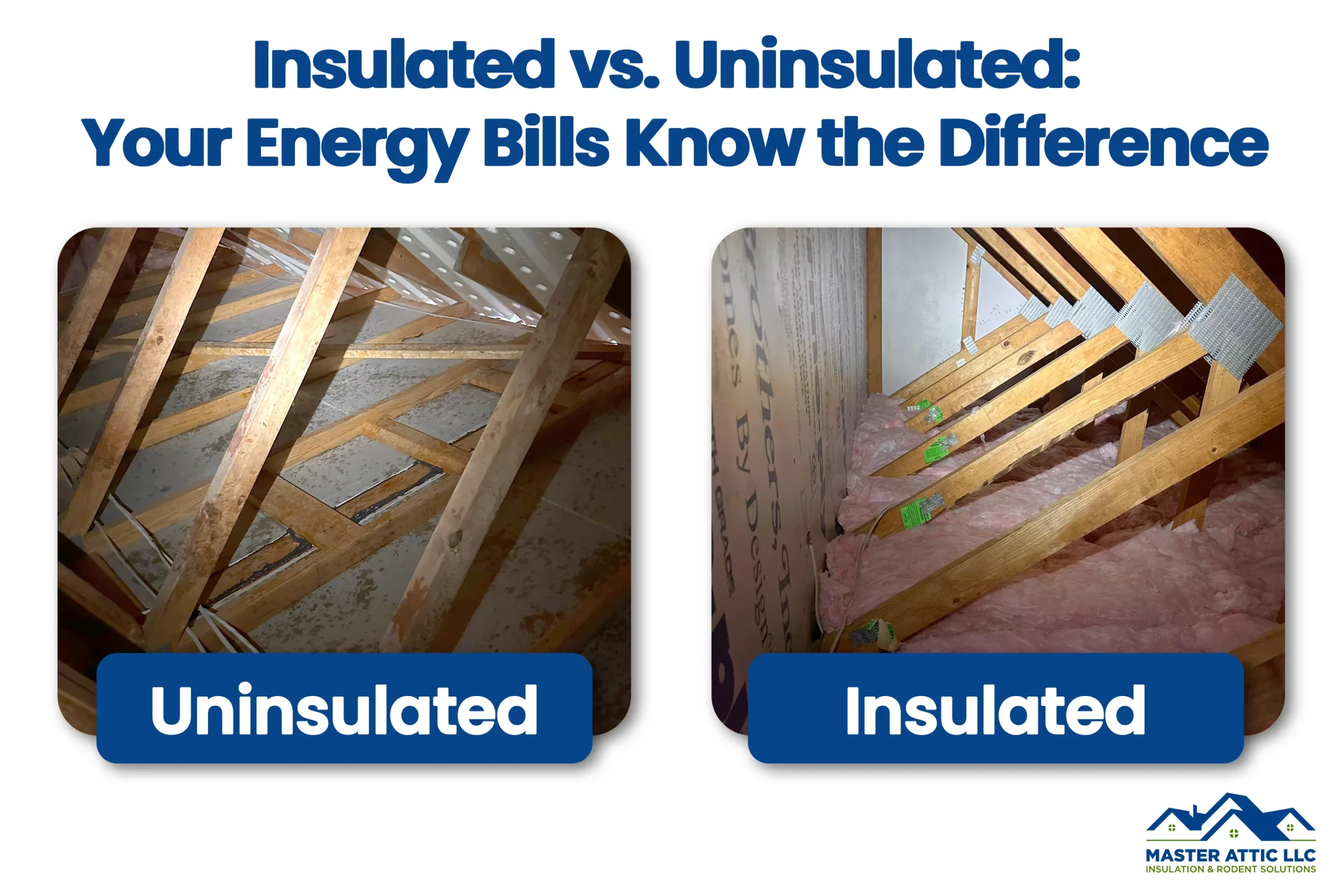
When your attic insulation is doing its job, your home’s internal temperature stabilizes. As temperatures rise or fall, your thermostat signals your HVAC system to adjust. With effective attic insulation, your AC doesn’t need to run as frequently or as hard to maintain your desired temperature.
However, with poor attic insulation, the situation quickly deteriorates. Heat penetrates your home faster, forcing your AC to cycle more often. That increased runtime drives up electricity usage and inflates your monthly utility bills.
According to the U.S. Environmental Protection Agency (EPA), sealing air leaks and adding insulation in attics and crawl spaces can save homeowners up to 15% on heating and cooling costs, or an average of 11% on total energy bills.
Common Signs Your Attic Insulation May Be Failing
It’s not always obvious when your attic insulation isn’t performing as it should. But many homes send subtle signals that something isn’t quite right. Here are a few signs to watch for:
- Uneven temperatures in different rooms
- The AC is running more often than usual
- A noticeable spike in energy bills during peak summer
- Excess indoor humidity or moisture problems
If you’re noticing any of these issues, there’s a good chance your attic insulation needs attention.
So, How Much Can Insulation Really Save You?
That’s the golden question. While savings vary by region, home size, and current insulation levels, most homeowners can expect tangible returns.
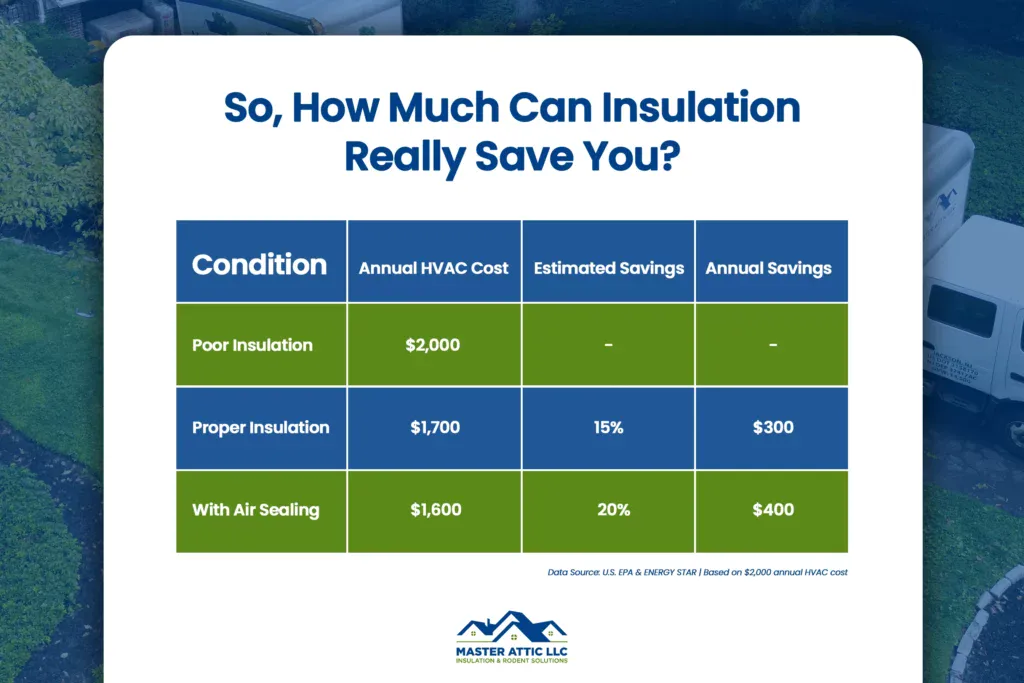
The EPA’s ENERGY STAR program estimates about 15% annual savings on heating and cooling costs, which can be hundreds of dollars a year for many households. For example:
Attic Insulation Savings Table (Based on $2,000 Annual HVAC Spend)
Condition | Annual HVAC Cost | Estimated Savings | Annual Savings |
Poor insulation | $2,000 | – | – |
With proper insulation | $1,700 | 15% | $300 |
With optimal sealing too | $1,600 | 20% | $400 |
That doesn’t include potential tax credits. Under the Inflation Reduction Act, many homeowners can claim up to $1,200 annually for home energy upgrades, such as insulation.
What Type of Insulation Should You Use?
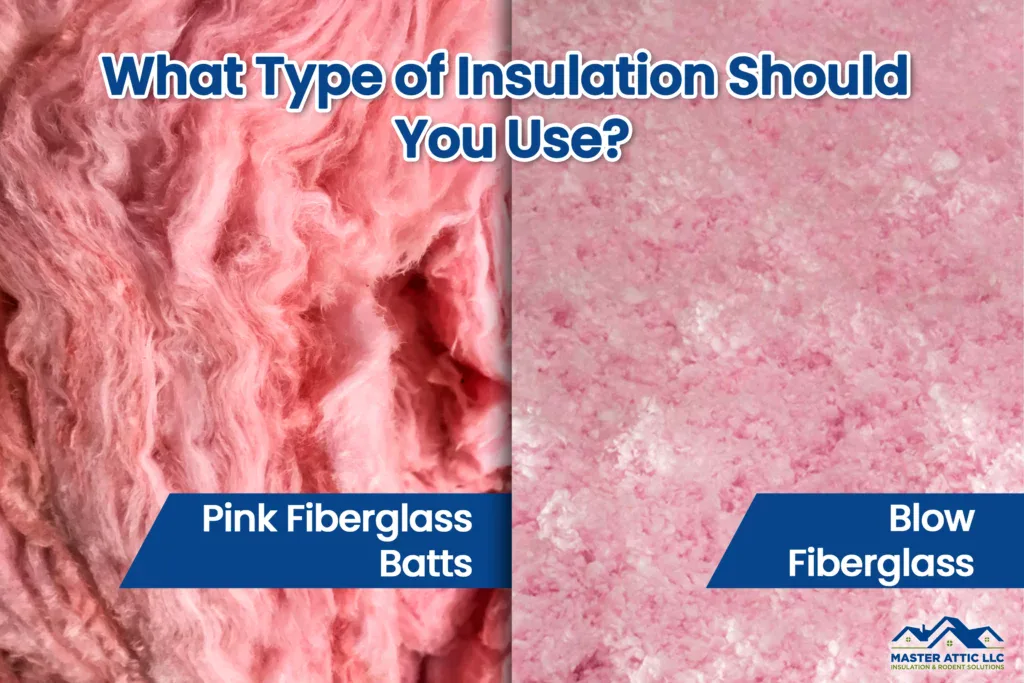
When you picture insulation, you probably think of those iconic pink rolls, known as batt insulation. Batt insulation is one of the most popular choices for attics and for good reason.
Fiberglass Batt Insulation
This material is made from recycled glass melted and spun into fibers, then formed into pre-cut sheets. It’s water-resistant, fire-retardant, and durable enough to last decades without breaking down.
Alternatives:
- Blown-in cellulose or fiberglass: Ideal for irregular-shaped spaces or areas that need top-off coverage.
- Spray foam: Offers good sealing and insulation in one, but comes at a higher cost and other issues.
Regardless of material, the R-value, which measures thermal resistance, is what matters most. In New Jersey (Zone 4), the Department of Energy recommends attic insulation rated R-38 to R-60.
Be Cautious: DIY Insulation Isn’t Always Straightforward
Although installing batt insulation may seem like an easy DIY project, it’s not always that simple. Different insulation types have different R-values, and selecting the wrong thickness for your climate zone can cause issues, including:
- Condensation buildup and mold
- Reduced indoor air quality
- Overworked HVAC system
- Inconsistent indoor comfort
That’s why it’s usually better to leave insulation upgrades to licensed professionals, like the team at Master Attic, who understand regional climate needs and installation standards.
Don’t Forget About Air Sealing
Insulation is only part of the story. According to ENERGY STAR, air leaks around recessed lighting, attic hatches, plumbing penetrations, and vents are major sources of energy loss. In fact, sealing air leaks before insulating is one of the most effective ways to increase overall efficiency.
Pairing insulation with proper air sealing can improve overall savings, prevent mold growth, and even extend the lifespan of your HVAC system.
Real-Life Payback: What You’re Really Getting
Insulating your attic can be a big investment, but it pays off in more ways than just your utility bill.
In the New Jersey area, a complete attic insulation project can average around $8,000, especially for larger homes or more complex installs that include air sealing, ventilation, and high-efficiency materials.
While the estimated direct energy savings may be around $300–$500 per year, that’s only part of the story.
Here’s why homeowners still move forward:
- Federal tax credits (up to $1,200) can offset a portion of the cost
- State and utility rebates may bring the net cost down further.
- Bundling with attic ventilation, mold prevention, or HVAC work increases the overall value and savings.
- Home comfort dramatically improves—more stable temperatures, less humidity, and fewer hot/cold spots.
- Your HVAC system lasts longer due to reduced strain.
- And in today’s real estate market, energy-efficient upgrades improve resale value.
Rather than thinking in terms of a single payback number, consider it a whole-home upgrade that delivers monthly comfort and long-term value from the moment it’s installed.
Final Thoughts
Learning how attic insulation affects your cooling bills is vital to the comfort of your home. Attic insulation can help alleviate the financial burden of keeping your home running smoothly.
Leave the attic insulation installation to the professionals at Master Attic to save money and stay cozy.
Ready to upgrade your attic insulation? Contact the team at Master Attic today at (800) 285-4009 to schedule your attic insulation evaluation.