
Is Wet Insulation Bad?
Picture this: you need to grab an old box in your attic, or a holiday is approaching, and your decorations need to be pulled from the rafters. You grab the ladder for your attic, climb the stairs, and turn on the light, only to be greeted by a musty smell.
The insulation around your attic floors or in your ceiling is soaking wet. What happened? Is wet insulation bad? And what can you do about it?
Unfortunately, having wet insulation can be problematic for several reasons, and taking care of it quickly is crucial to protecting your home and family.
Let’s break down below why insulation is bad and what to do if this scenario happens to you.
Why Attic Insulation Should Never Be Wet
Your attic insulation is designed to trap and regulate heat transfer, not moisture. Your insulation material is likely made of recycled materials like fiberglass, and while it is water-resistant, it is not waterproof.
A few drops of water here or there may not be a problem, but if your insulation gets significantly wet, it will lose its effectiveness. If your insulation is waterlogged, it can’t control your home’s heat transfer, and your home will quickly suffer as a result. Think of uneven temperatures, humidity problems, and even pests!
As the water problem spreads, it can even damage the surrounding materials. The boxes of clothes or holiday decorations will now be at risk of water damage and mold as well. If mold takes hold in your attic, it will cause even more structural problems for your home, and it can also negatively impact your home’s indoor air quality.
If you have someone in your household who is immunocompromised or already deals with respiratory issues, they are at an even greater risk of suffering from poor air quality.
How Attic Insulation Gets Wet
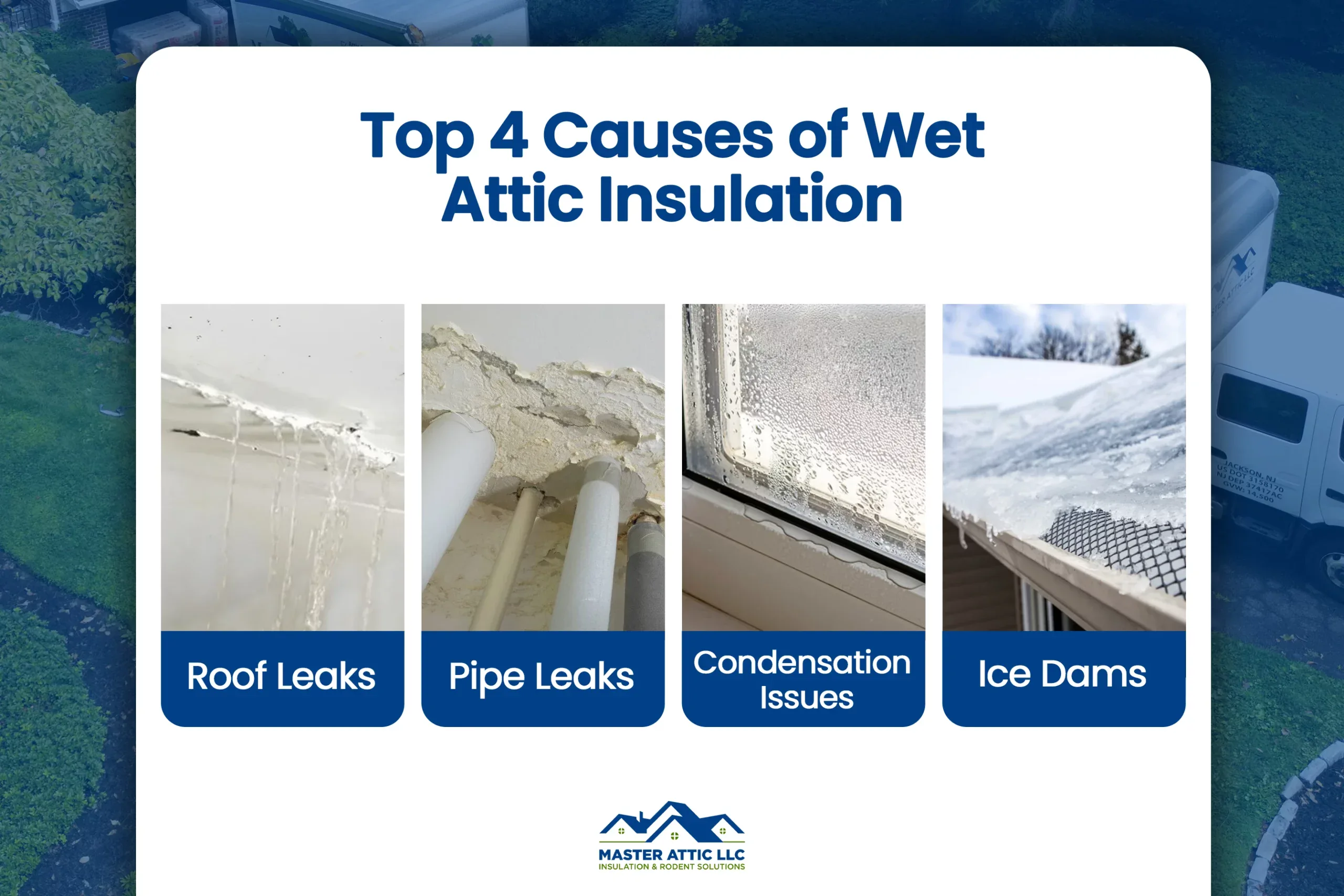
It’s vital to know how attic insulation gets wet so you can prevent it from happening in the first place. The situations below are some of the most common reasons for wet insulation:
- Roof leaks: This problem is common for attic spaces. The tiniest gap in your roof line or a single missing shingle can lead to a roof leak, resulting in water all over your attic floor. This problem will only continue until the leak is addressed, so it can cause a big issue very quickly.
- Pipe leak: If you have any sort of plumbing or a water line that runs through your attic space, an unexpected leak can pump a serious amount of water into your attic. A simple leak or a burst pipe will typically cause problems throughout your home, including in your attic.
- Condensation Issues: Does your home or attic space suffer from humidity or moisture problems? If so, it might result in wet insulation. As hot air rises into your attic, it needs to be moved out in a controlled manner. If your insulation is struggling, that hot and humid air will linger and condense.
- Ice Dams: This problem occurs in the colder months, but it is still impactful. Ice dams that form on your roof edge can push up against your roof line, forcing their way into your attic. Once the ice is inside, it will quickly melt and leak onto your insulation and your possessions.
What Happens Once Insulation Is Wet?
If any of those scenarios happen to you, the first problem will be the water itself. It will leak and drip through your insulation, rendering it ineffective. If it is waterlogged, it will lose its thermal performance, and your home will start to experience temperature fluctuations.
As a result, your HVAC system will have to work harder to correct the temperature issue. It will run your AC unit constantly, and your energy bills will skyrocket.
If the water issue isn’t resolved, your home’s structure is at risk. Mold and mildew can take hold, eventually leading to wood rot and severe structural damage.
Your home will also become more vulnerable to pest infestations. Pests can easily infiltrate an attic with roof damage, and wet insulation can become a nesting ground for pests like squirrels and mice.
Can Wet Insulation Be Saved?
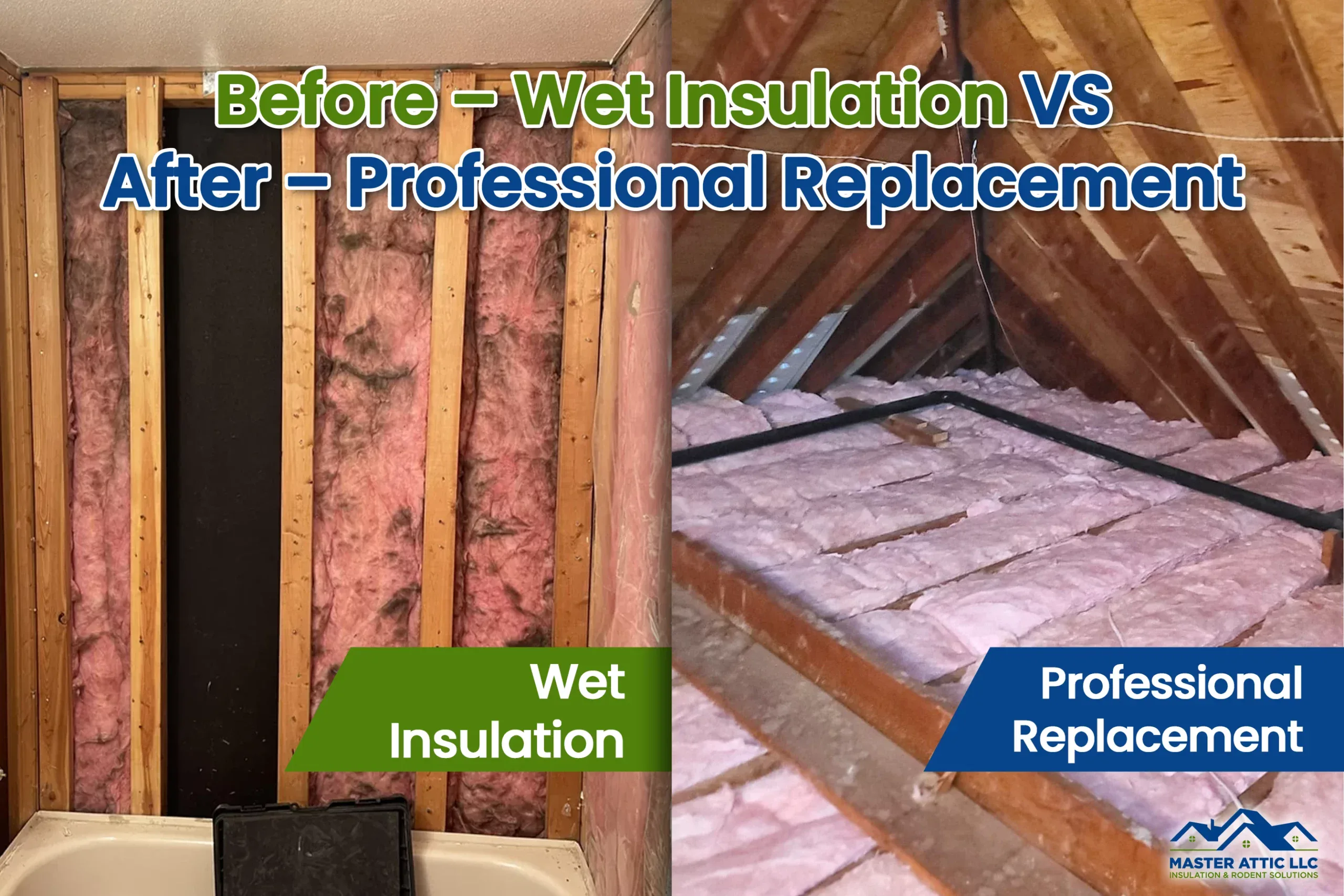
The short answer to this is, it depends. If your insulation is only wet in a small area or the problem is contained, it might be salvageable if you act quickly. Set up some fans and open a window if applicable to dry out the area.
If the water leak was large and your insulation is soaking wet, it will most likely need a full replacement. This ensures your entire area is clean and dry with no residual moisture issues. It also protects your living spaces by providing powerful attic insulation once more.
What To Do if You Find Wet Insulation?
If you find wet insulation in your attic, the first step you should take is to identify the source of the moisture. Where is it coming from? Temporarily or permanently stopping the leak will prevent the water from spreading and getting worse.
Next, you should assess the damage. If the moisture spot is small, attempt to dry it out on your own. If not, it’s best to leave the issue to the professionals. Professional attic insulation teams can evaluate your space and determine if a full attic insulation removal and replacement is necessary for your space.
Their professional opinion is vital to your home’s recovery! If it is recommended that you remove the damaged insulation, take that advice. Leaving even a small amount of moisture behind after a water leak will still raise your risk for mold and wood rot.
How To Prevent Wet Attic Insulation?
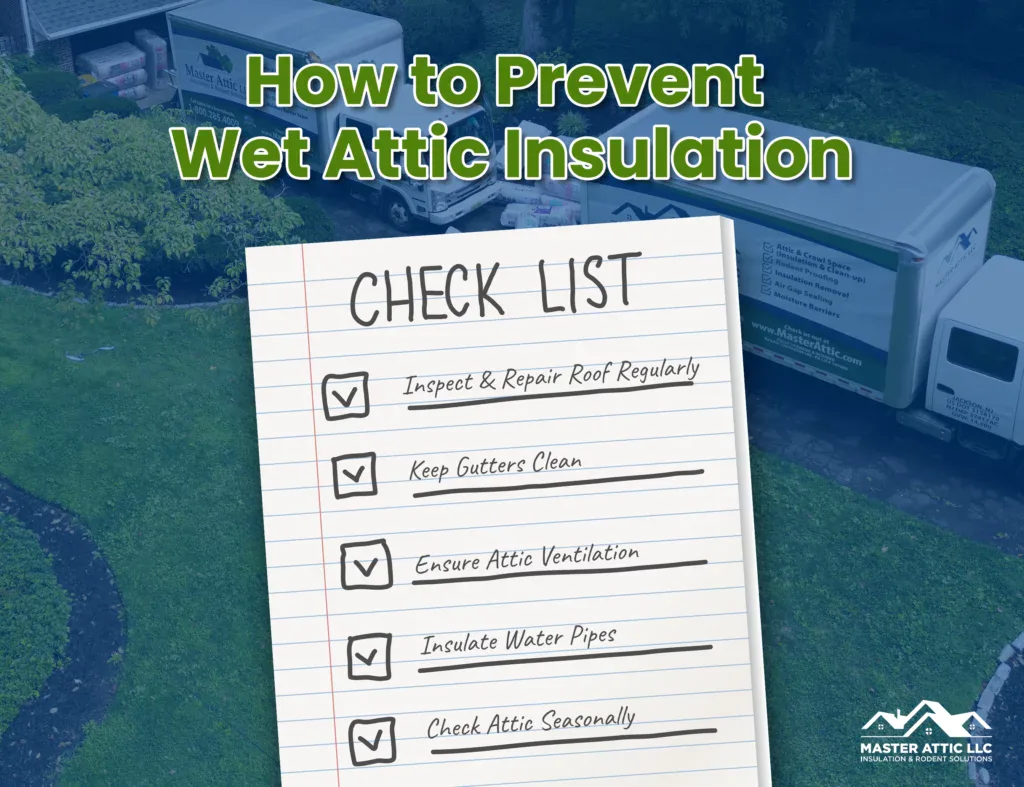
Follow these steps to prevent wet attic insulation:
- Keep the roof and gutters in good condition
- Ensure proper attic ventilation
- Insulate pipes to keep them from freezing
- Check your attic regularly for issues
In conclusion, is wet insulation bad? Unfortunately, it can be if you don’t address the problem right away. Contact the team at Master Attic immediately if you discover wet insulation in your attic for a full removal and replacement.
Don’t ignore wet insulation! Call Master Attic right away at (800) 285-4009, and we will handle your insulation recovery quickly and efficiently.